
What is there to say about The Louvre in Paris , France ?
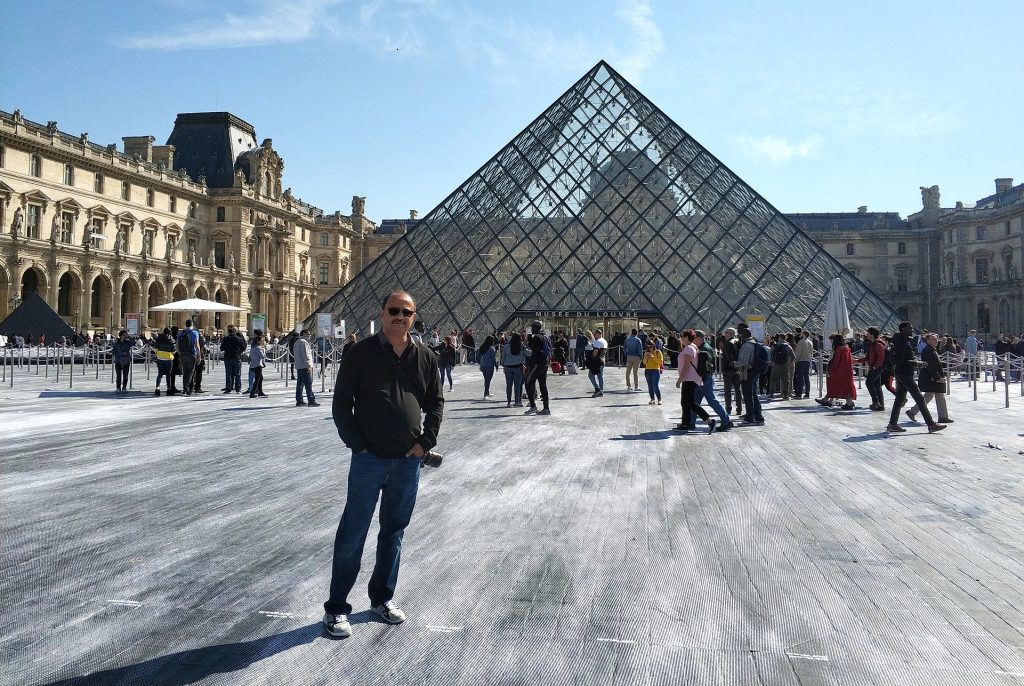
The Louvre Museum or Musée du Louvre, in French, is not only the world’s largest art museum, but also stands as France‘s most significant historical monument. Its story starts in the late 12th century, when it was built as a fortress by King Phillip II. It later served as a royal residence, housing French kings from the 12th century right up until it opened its doors as a museum back in 1793. Its architecture combines an impressive 800-year blend of Medieval(12th century), Renaissance(16th century), French Baroque(17th century) and Modern design (20th century)with I. M. Pei’s glass pyramid entrance.
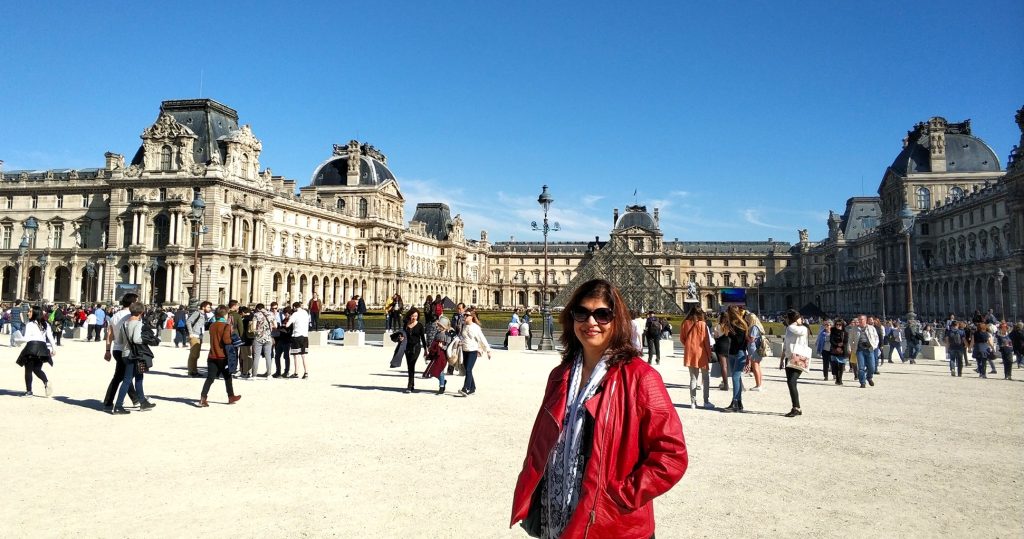
Today, it holds around 38,000 works spanning from prehistoric times to the 21st century, spread across a massive 782,910 square feet of space. The museum is organized into three wings – the Sully wing, the Denon wing and the Richelieu wing; four floors, and eight departments, with countless corridors, halls, and galleries showcasing centuries of art gathered from across the globe.
Navigating the Louvre
It was obvious that we couldn’t do justice to such a grand monument – forget a day, even a whole week wouldn’t be enough. In fact, I had dreaded this for quite some time. Before going to Paris, I’d had the opportunity to visit Louvre Abu Dhabi, which is extremely splendid with a vast collection of items. But even that one is nothing compared to its Paris counterpart. Just seeing the whole of Louvre Abu Dhabi had taken me more than half a day. And that was without spending too much time in front of most exhibits.
So my main concern was , how would I even manage to cover half of the Paris Louvre in a single day? Add to that the physical strain and museum fatigue, and it felt like an even bigger challenge.
The only solution to this was to make a list of all the things I wanted to see first, after which I would attempt the rest. Of course the first item on the list was Leonardo da Vinci’s Mona Lisa ! Everybody in the world goes to the Louvre to see the Mona Lisa if nothing else! In fact the Mona Lisa is known as one of the ‘Big Three‘s’ of the Louvre, the other two most famous and iconic masterpieces being the Winged Victory of Samothrace and the Venus de Milo.
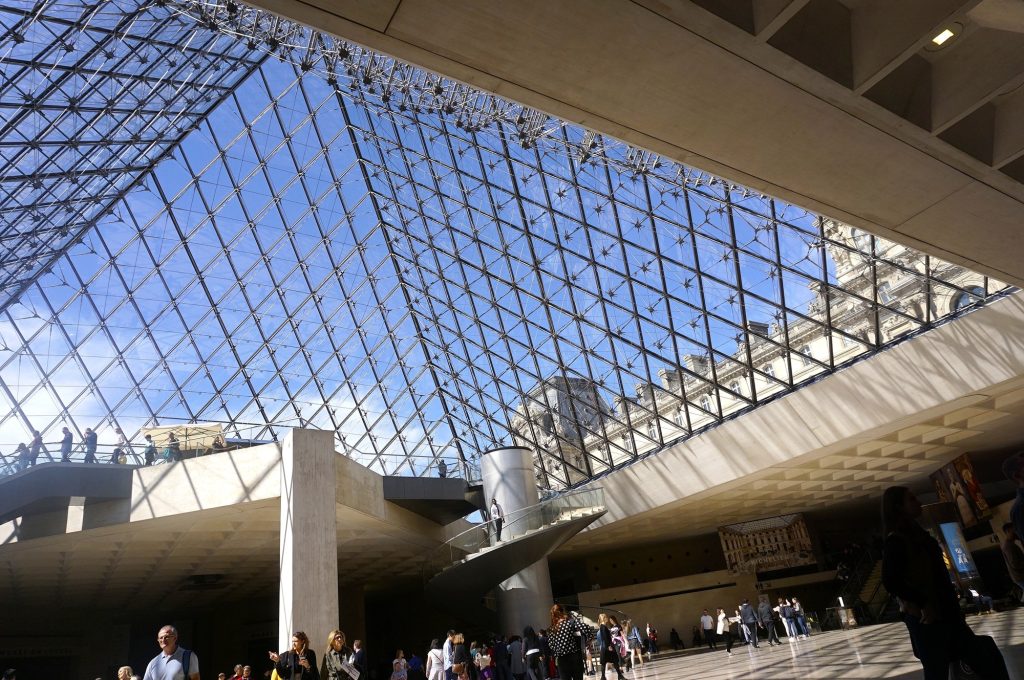
Usually the queue to enter the museum goes on for miles, but luckily that day for us it was not too long. We entered through the main entrance which is the large glass pyramid. The pyramids (there are five) ,obviously a modern addition ,were part of the huge ‘Grand Louvre’ modernization project in the 1980s. The goal was to create a central underground entrance that could handle visitors while preserving the historic palace above ground.
Walking into the Louvre Museum can feel a bit overwhelming at first. Corridors stretch endlessly, staircases lead in every direction and the sheer scale of the place threatens to turn your visit into a rushed checklist. But with just a few hours in hand, we decided to slow down and follow a simple, intentional route – one that would let us experience the Louvre without getting lost in it.
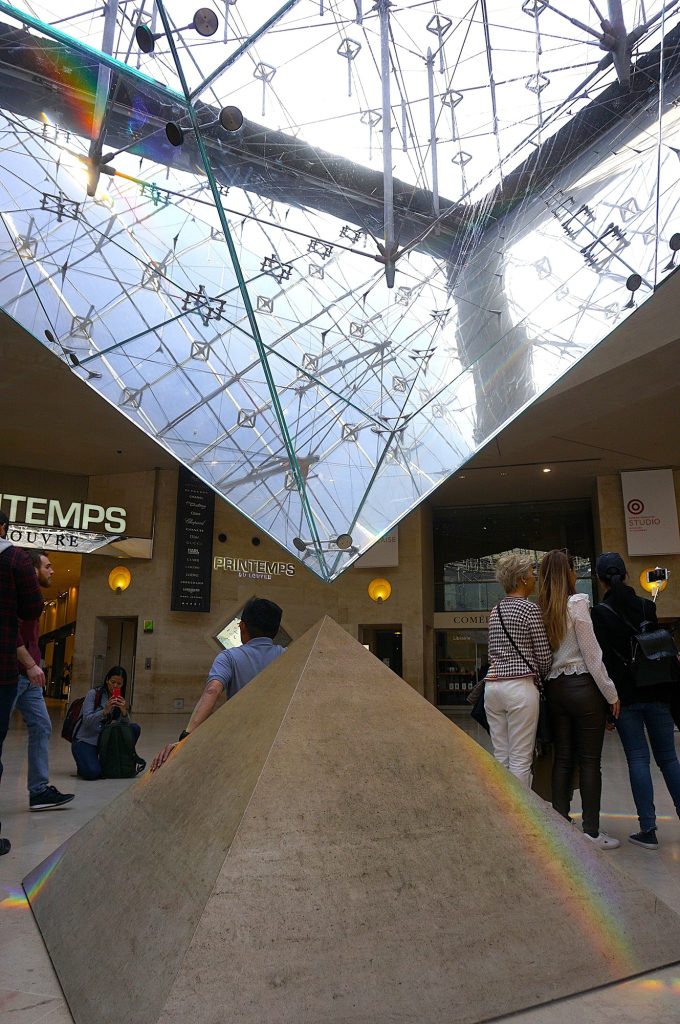
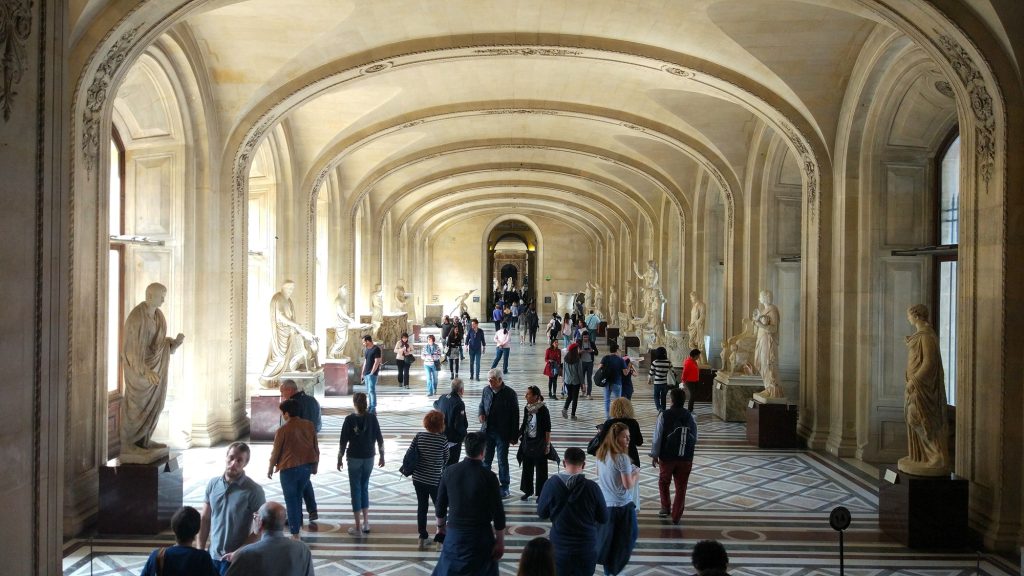
We entered and immediately made a beeline for the Mona Lisa in the Denon wing, where the museum revealed its most famous treasures. But before that we had to cross via the Sully wing, a hall full of amazing sculptures that we couldn’t ignore since they were on the way. There are almost 10,000 sculptures and statues both inside and outside the Louvre. I’ll go into the details about the statues in a bit
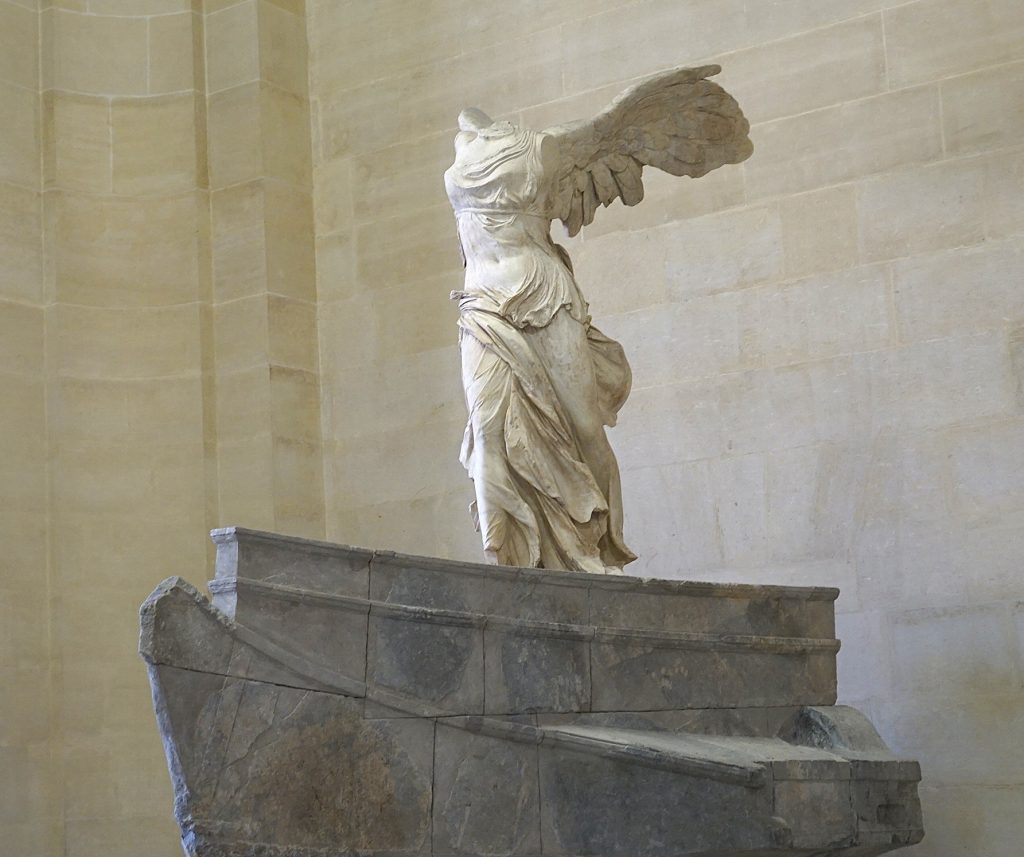
The Winged Victory of Samothrace
Almost immediately, I found myself standing at the foot of the grand staircase, looking up at the Winged Victory of Samothrace. This statue gives you the illusion of descending towards you from the sky. Perched dramatically at the top of the staircase, this headless statue of Nike (the Greek goddess of victory) seemed to command the entire space, her drapery full of movement like they were being whipped by strong sea winds, clinging to her body and flowing behind her. This created a vivid illusion of wind , motion and triumph. Despite the absence of a head and arms the sculpture feels complete. The statue was created around 190 BCE during the Hellenistic period and discovered in 1863 on the island of Samothrace, a Greek island in the northern Aegean Sea.
The Mona Lisa
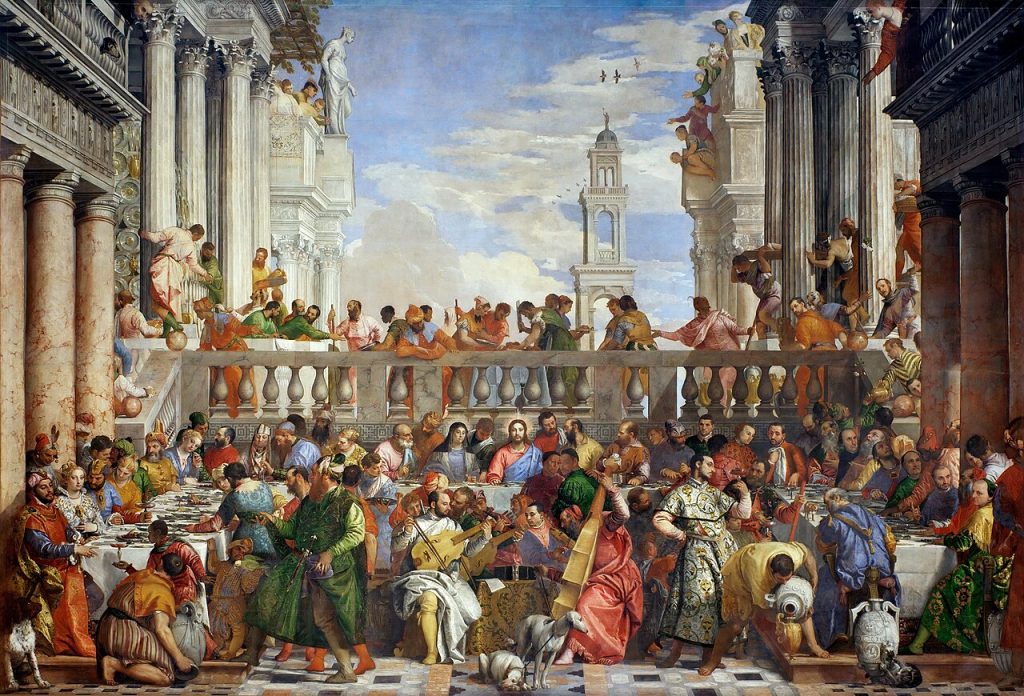
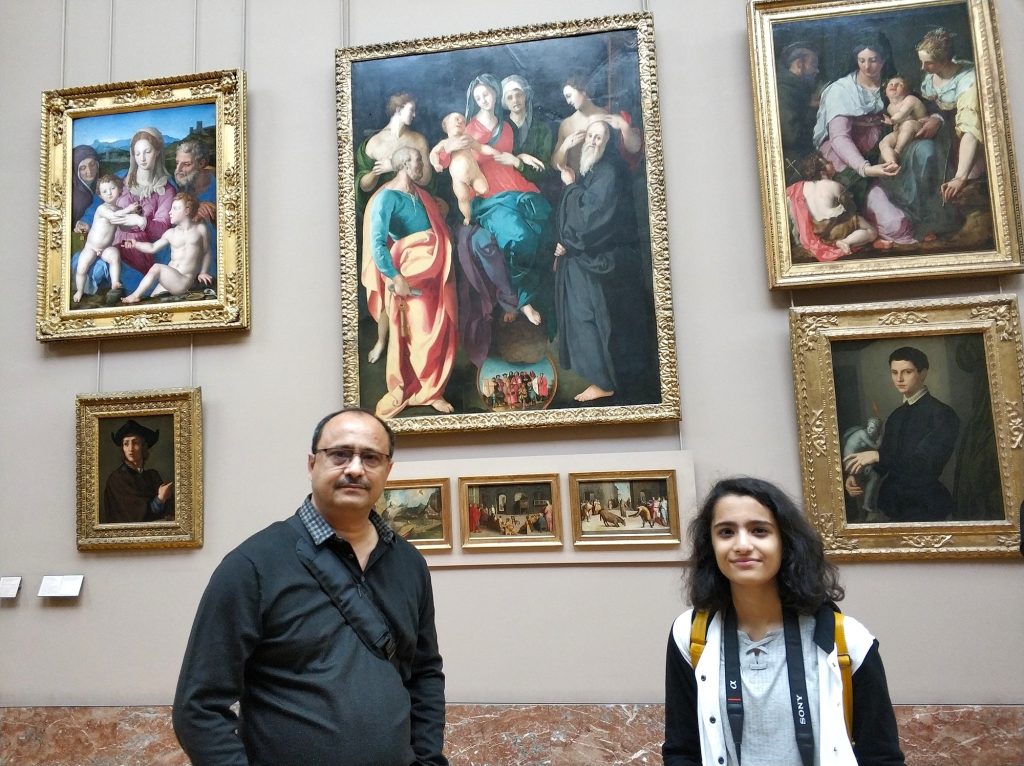
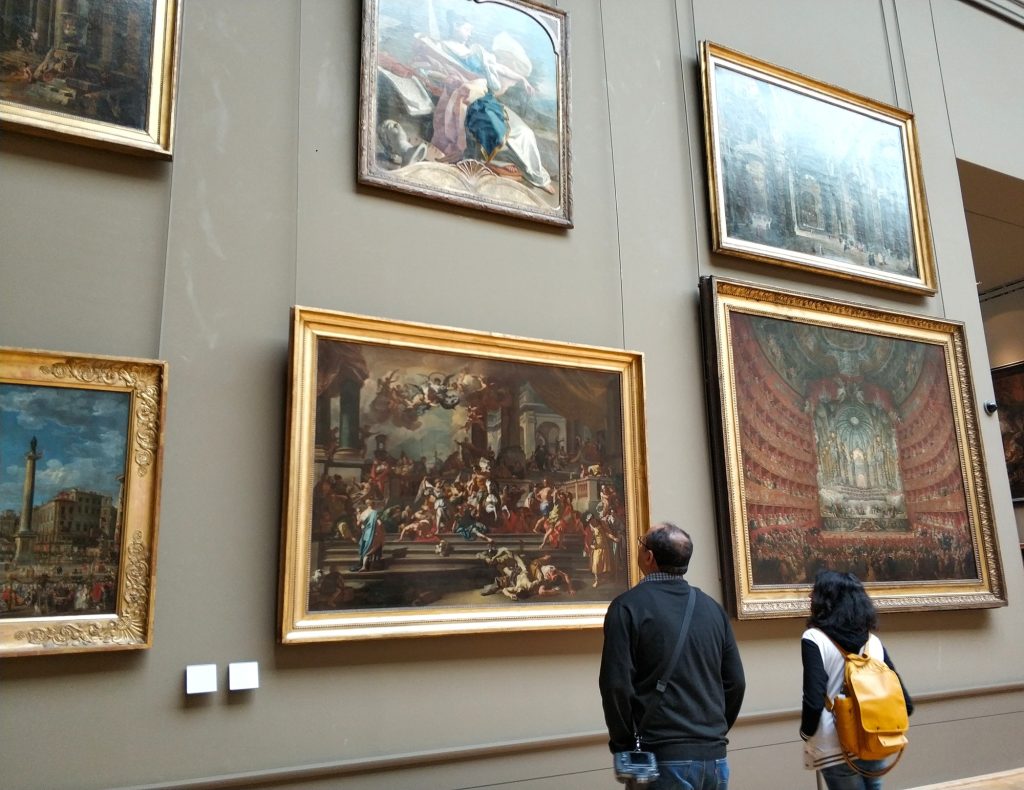
After the onslaught of statues , we went through hall after hall, full of remarkable paintings huge in size from roof to floor. From there, we followed the crowd – but for once, it felt justified. After all these magnificent displays we reached the Mona Lisa. The painting was so small we couldn’t even find it. It was only because of the huge crowd surrounding it that we understood where it was. Inside a packed room, behind glass and a barrier of phones (everyone busy clicking photos ) hung the world’s most famous painting : the Mona Lisa. Smaller than expected, quieter than imagined, yet impossible to ignore. A few steps away, almost as if in contrast, stretched the enormous The Wedding at Cana by Paolo Veronese – vast, vibrant and strangely underappreciated given its scale.
Examining the Mona Lisa minutely was out of the question since it was behind a bulletproof glass display cordoned far off from the crowd . It’s not just about theft ; the painting has been vandalized multiple times (including a cake attack in 2022!). It is the most expensive painting in the world at a value of around 870 million dollars !! After all the hype, the first surprise was its size. The Mona Lisa is actually quite small – about 77 cm tall.
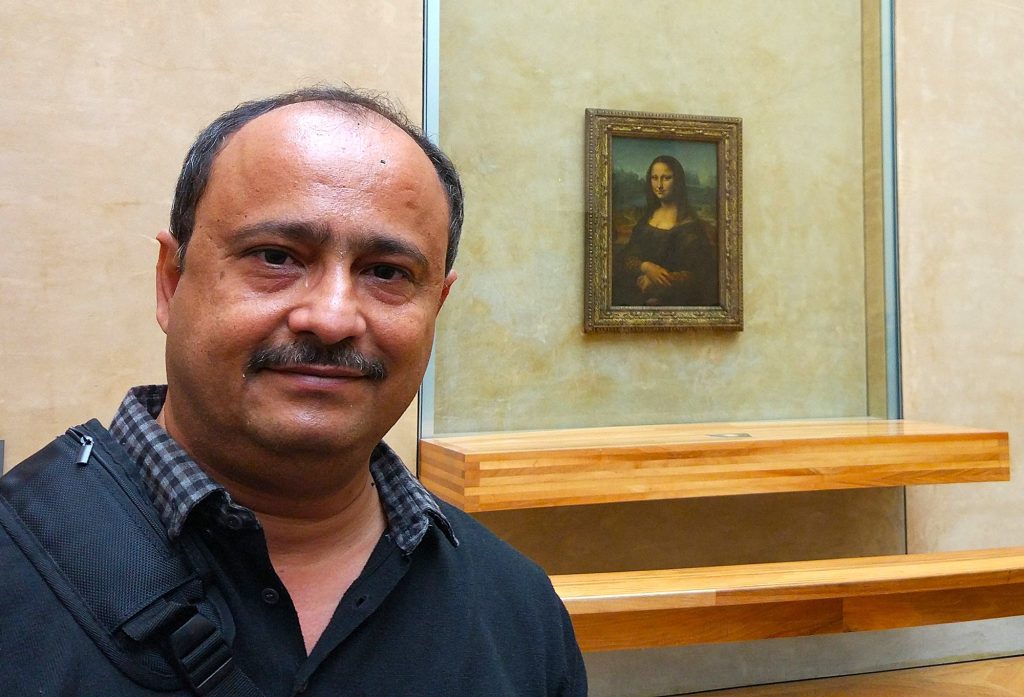
In spite of its size , the portrait is not only very realistic but also is a fine example of Leonardo Da Vinci ”s artistry – his use of sfumato, a technique that blurs edges and creates soft transitions ; where he displays a subtle use of light and shade – so when you see it from different angles Mona Lisa ‘s face shows different emotions. Look directly at her mouth – it fades. Focus on her eyes – it reappears. But that obviously is for a keen connoisseur of art to understand.
Interesting tidbits about the Mona Lisa
In 1911, the painting was stolen from the Louvre by an Italian handyman who believed it should be returned to Italy. For two years, the Mona Lisa was missing – ironically making her even more famous when she was recovered.
Most believe Mona Lisa is Lisa Gherardini , the wife of a Florentine merchant. But like everything about the painting, her identity still carries a hint of mystery – adding to her allure. Though now firmly housed in the Louvre, she has left France only a few times – famously visiting the U.S. in the 1960s, where crowds queued for hours just to catch a glimpse.
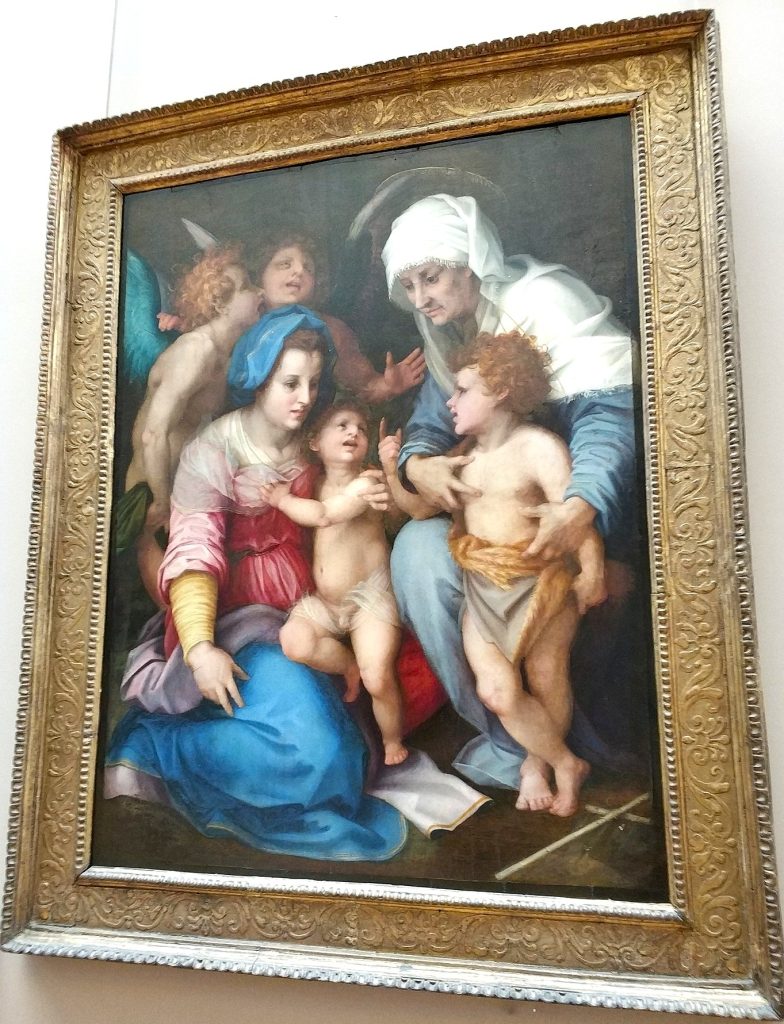
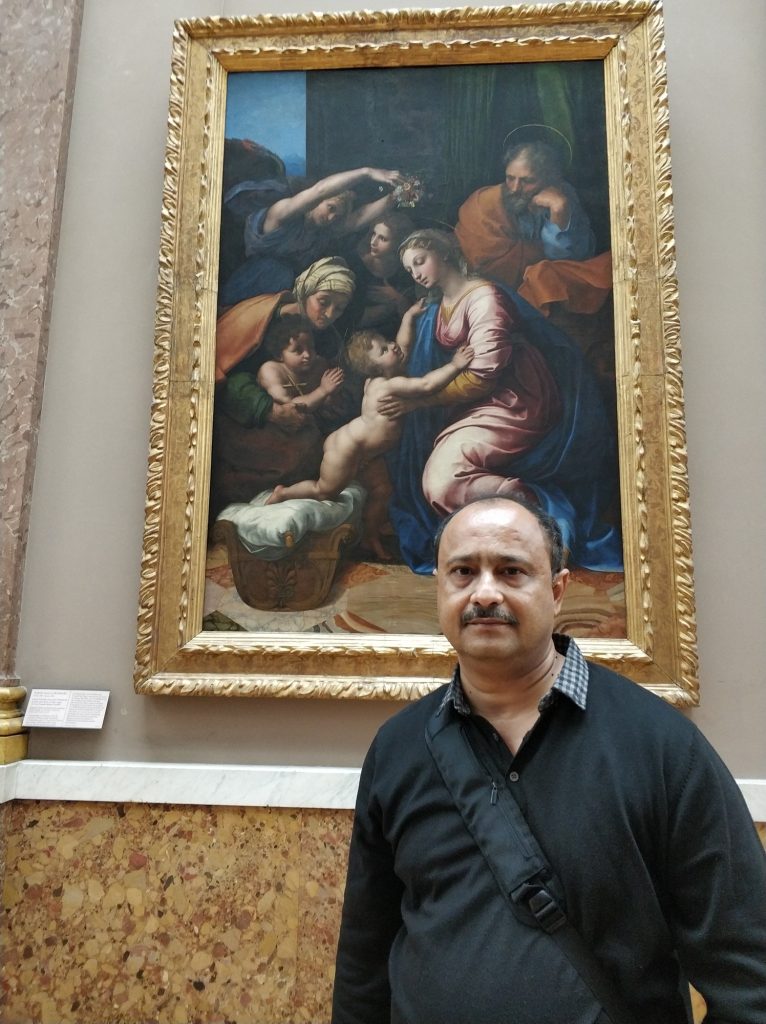
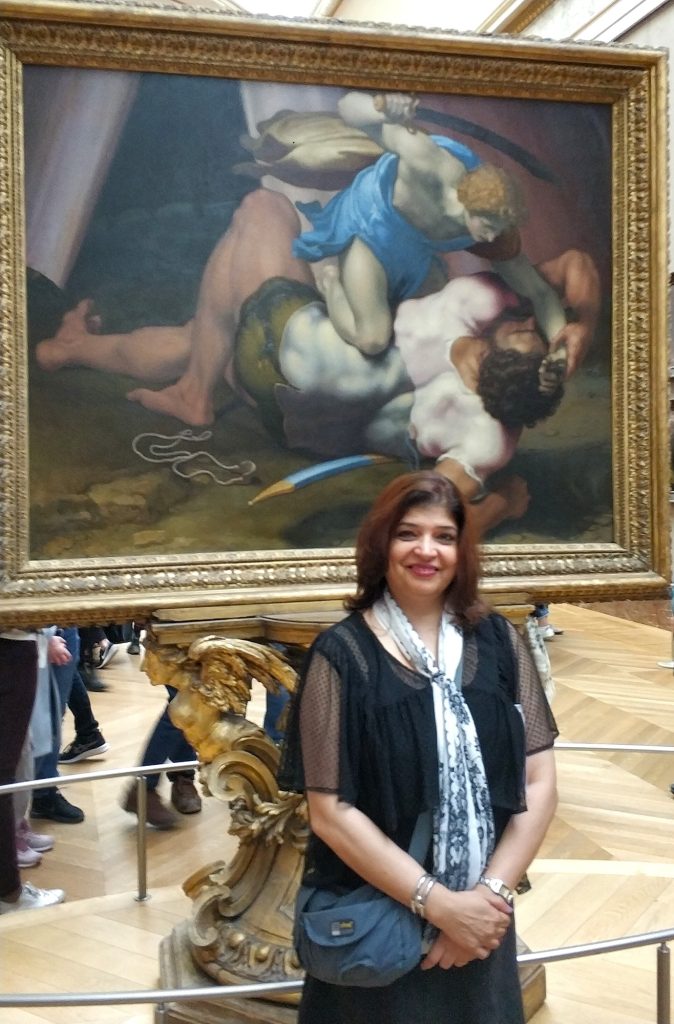
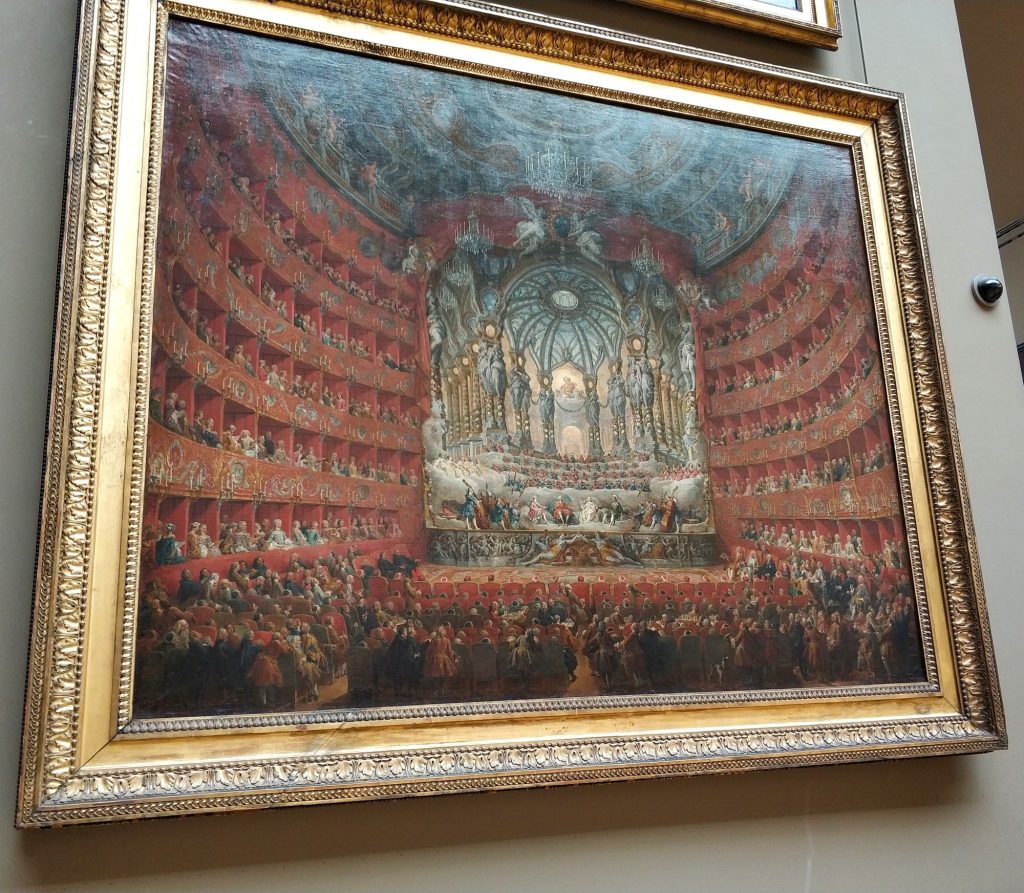
In a room full of masterpieces, it’s the smallest painting that holds the biggest crowd – and perhaps the biggest mystery. But for me it was an interesting painting which I found slightly over-hyped. It is considered as one of da Vinci ’ s finest works but there were better works of his close by . So after the customary photos and selfies with Mona darling we started checking out the other ‘million’ displays in the museum.
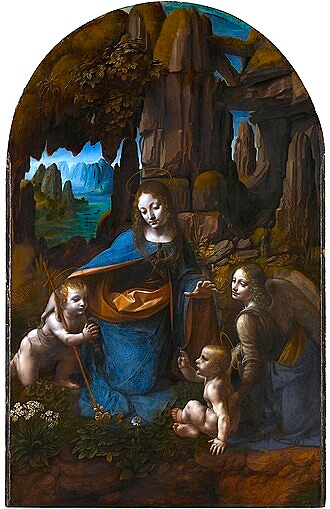
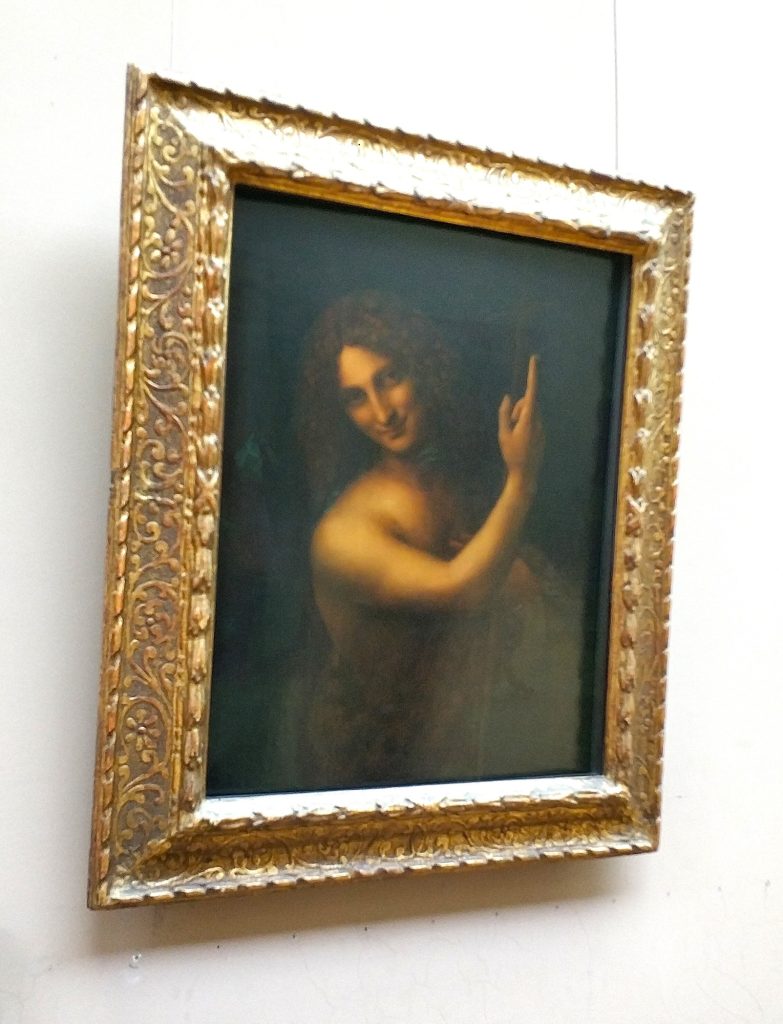
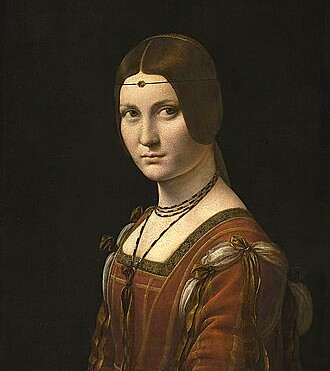
The Louvre houses the world’s largest collection of Leonardo da Vinci paintings in a single museum, including five universally recognized works by the artist. Apart from the Mona Lisa, Leonardo da Vinci ‘s Virgin and Child with St. Anne, St. John the Baptist, Madonna of the Rocks and La Belle Ferronnière are considered among Leonardo‘s major works by most art historians.
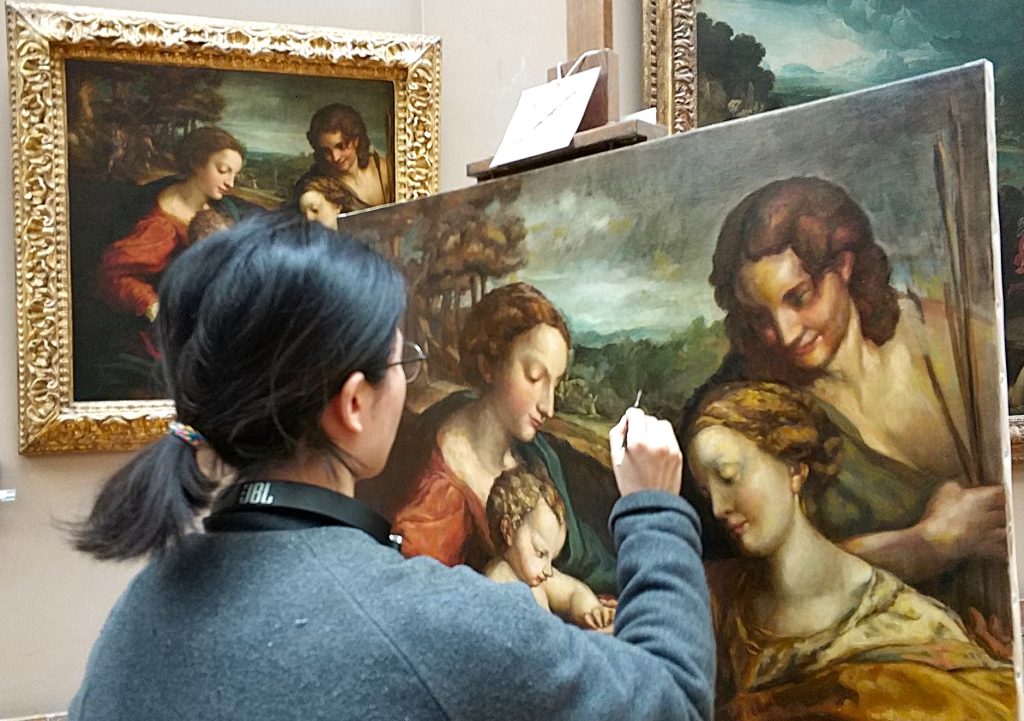
In Virgin and Child with St. Anne, the painting brings together three generations – Saint Anne, her daughter the Virgin Mary, and the infant Jesus – in a graceful composition filled with warmth and tenderness. Mary reaches toward Jesus as He playfully embraces a young lamb, a symbol that foreshadows His future sacrifice.
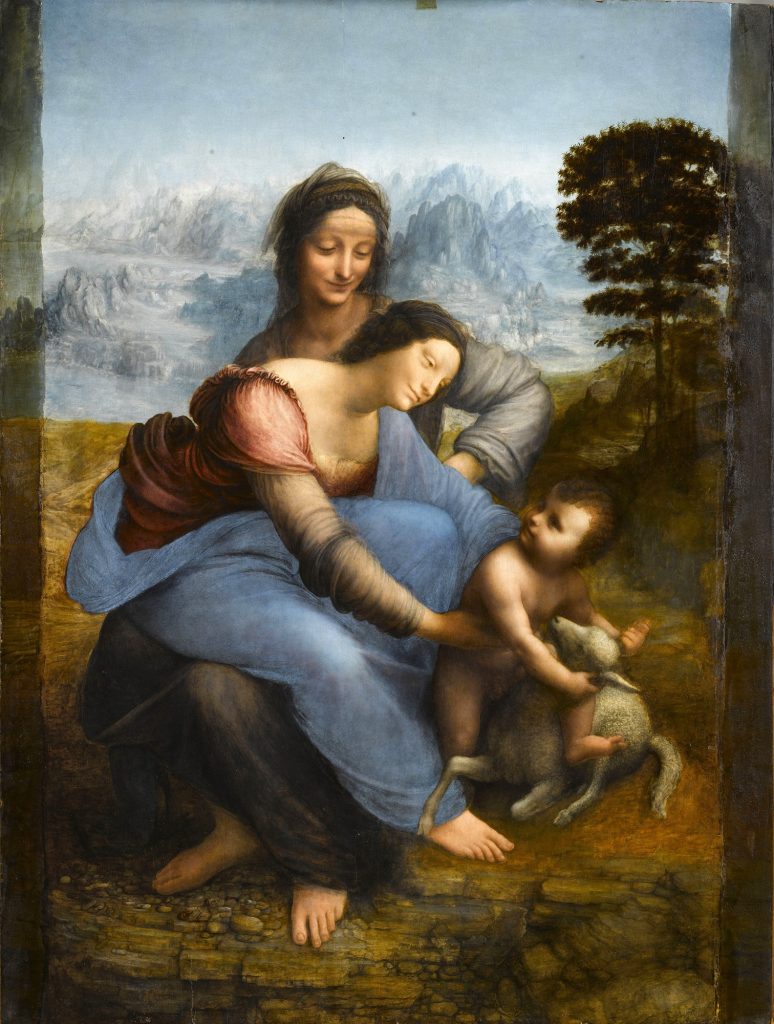
Madonna of the Rocks is celebrated for its breathtaking composition and dreamlike atmosphere. Set inside a mysterious rocky grotto, the painting depicts the Virgin Mary with the infant Jesus, the young John the Baptist and an angel in a scene that blends natural beauty with deep religious symbolism.
And in St. John the Baptist, emerging from a dark background, John the Baptist is illuminated by soft light, his gentle smile and direct gaze creating an almost hypnotic connection with the viewer. With one hand resting on his chest and the other pointing upward, he gestures toward the heavens, symbolizing the coming of Christ and inviting quiet reflection.
La Belle Ferronnière : this captivating portrait depicts a young woman with a calm, confident expression that feels remarkably modern. Her elegant dress, delicate jewelry and the thin band across her forehead reflect the refined fashion of the late 15th century, while Leonardo’s masterful use of light and shadow gives her face a lifelike softness.
In each and every painting, Leonardo’s mastery is evident in every detail, from the gentle expressions and natural poses of the figures, to the soft, atmospheric and at the same time dramatic landscapes that stretches into the distance. They reflect Leonardo’s fascination with both nature and human emotion . Using his signature sfumato technique, he blends light and shadow so seamlessly that the figures appear almost alive, softening the figures and bathing them in gentle light, giving the scenes a remarkable sense of depth and realism.
The Various Departments in the Louvre
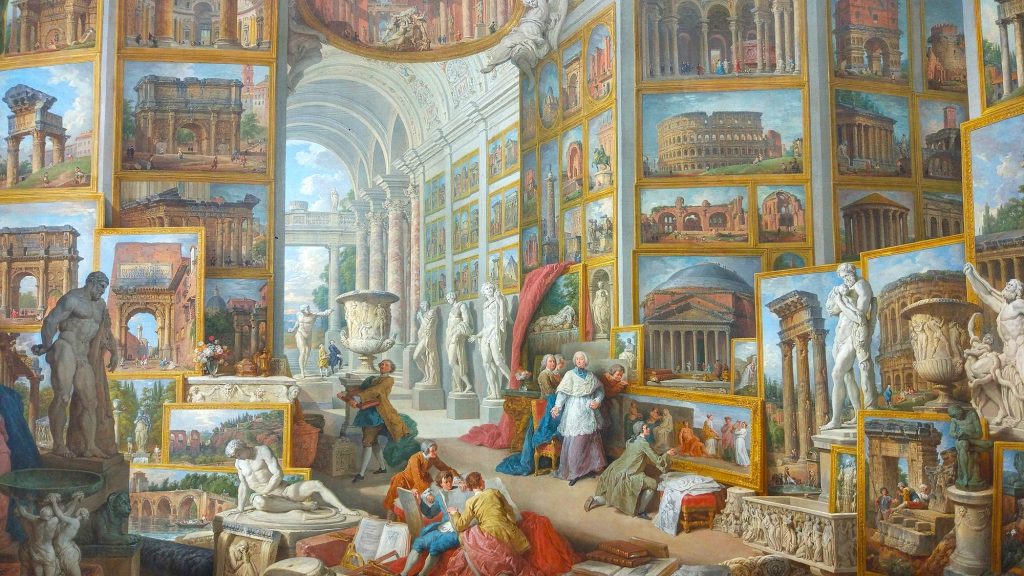
The displays in the Louvre can roughly be divided into eight departments :
Egyptian antiquities
Near Eastern antiquities
Greek, Etruscan and Roman, which are mostly sculptures
Islamic art
Decorative arts
Paintings
Of course among these our first priority were the paintings . The painting collection has more than 7,500 works from the 13th century to 1848.
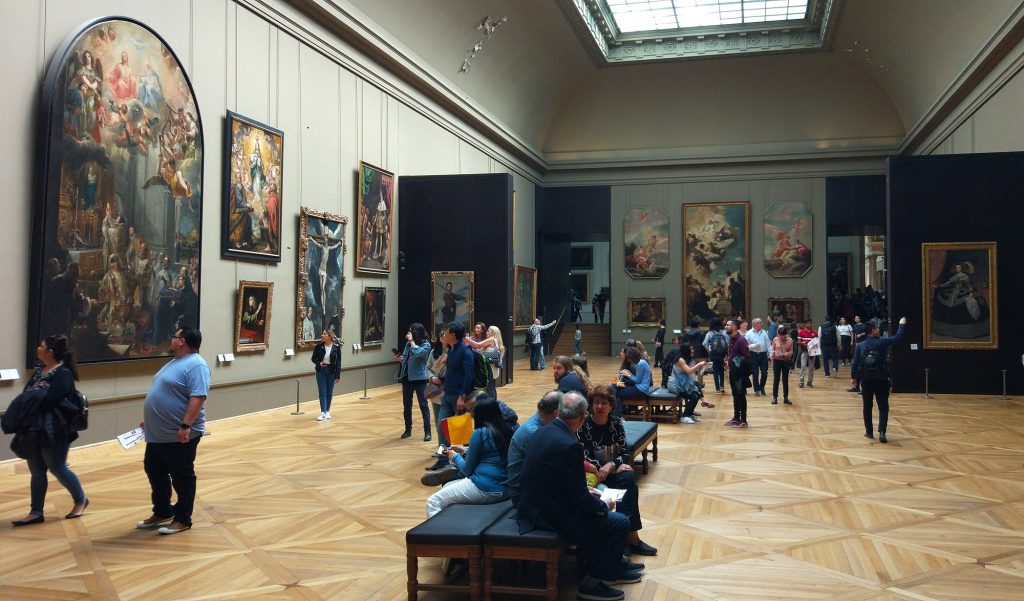
Paintings from the 13th century to 1848 –
The French Painters
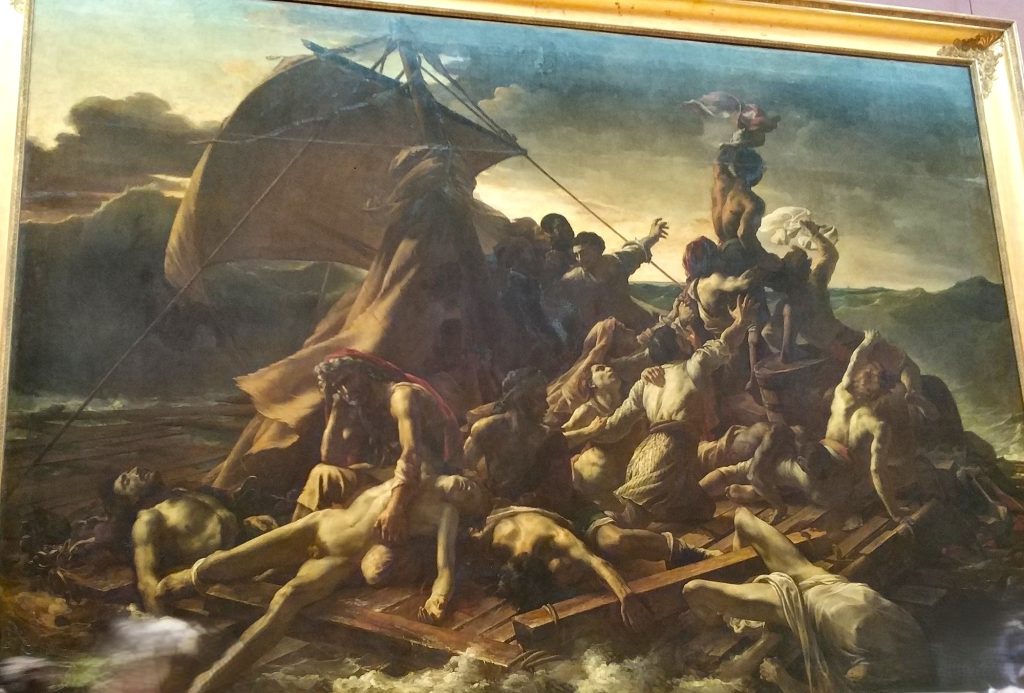
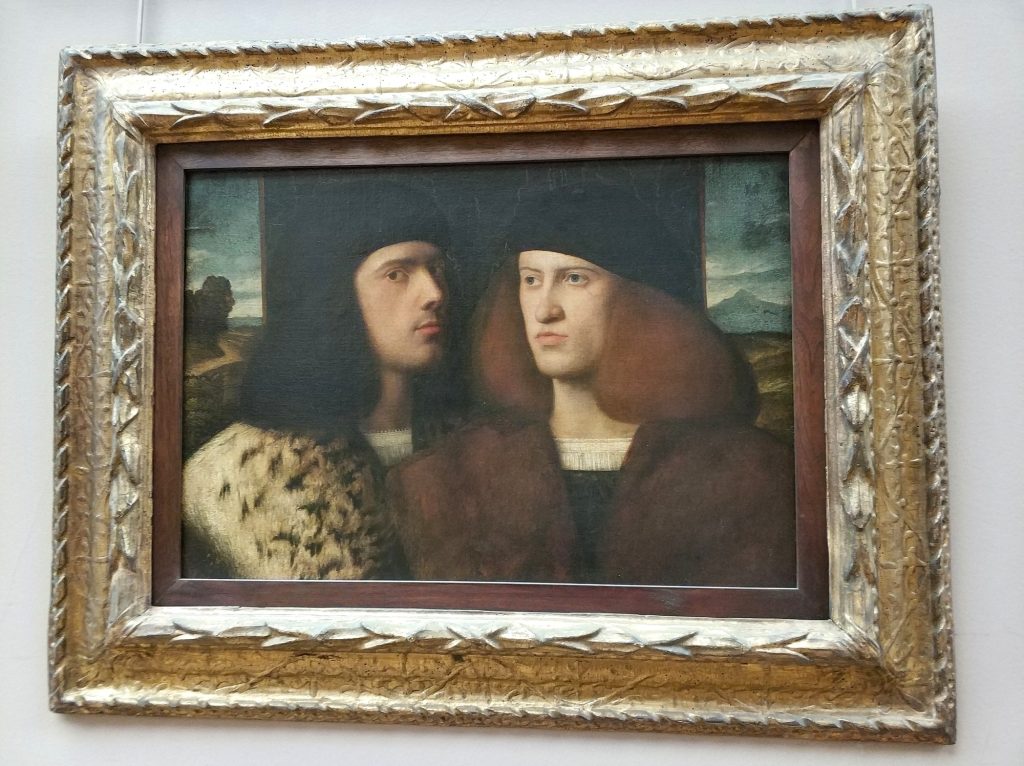
Among the French painters the most popular works are Jacques-Louis David’s The Coronation of Napoleon ; Théodore Géricault’s The Raft of the Medusa ; and Eugène Delacroix’s Liberty Leading the People.
If the Mona Lisa draws you in with quiet mystery, the surrounding galleries of the Louvre overwhelm in an entirely different way – with sheer scale, drama and history unfolding across vast canvases.
Standing before Jacques-Louis David’s The Coronation of Napoleon, you’re not just looking at a painting but witnessing a carefully staged moment of power. Napoleon crowns himself, not the Pope, a subtle yet bold declaration of authority. The sheer size of the canvas, packed with richly dressed figures and intricate details, makes you feel like an observer at a grand imperial ceremony.

Just a short walk away, the mood shifts dramatically with Théodore Géricault’s The Raft of the Medusa. Here, grandeur gives way to desperation. Based on a real shipwreck, the painting captures a haunting moment of hope and despair as survivors cling to a fragile raft, straining toward a distant rescue ship. The bodies form a chaotic pyramid of anguish and determination, and the longer you look, the more unsettling details emerge.
Then, in Eugène Delacroix’s Liberty Leading the People, emotion surges back with revolutionary force. Liberty herself strides forward, fearless and defiant, the French flag raised high as she leads a diverse crowd over the barricades. It’s raw, energetic and deeply symbolic – a painting that feels less like a historical scene and more like a rallying cry frozen in time. The crowd in front of the painting was proof enough of its timeless appeal.
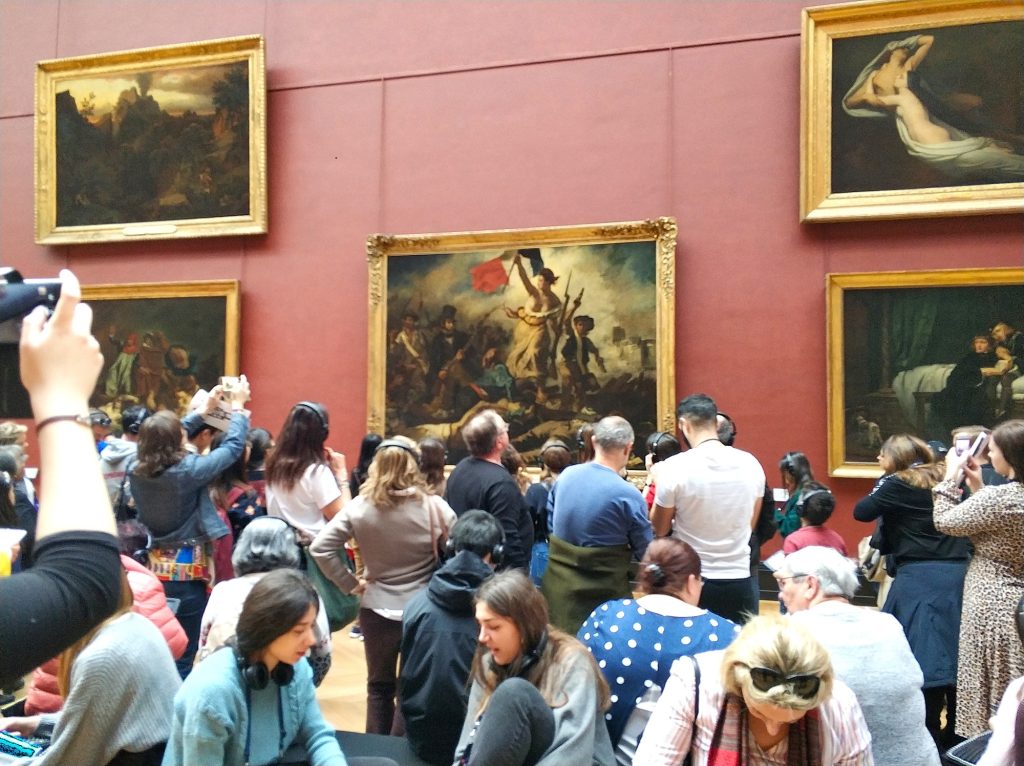
Together, these masterpieces remind you that the Louvre isn’t just about quiet admiration – it’s about stepping into moments that shaped history, each canvas pulling you into a different story, a different emotion and a different world.
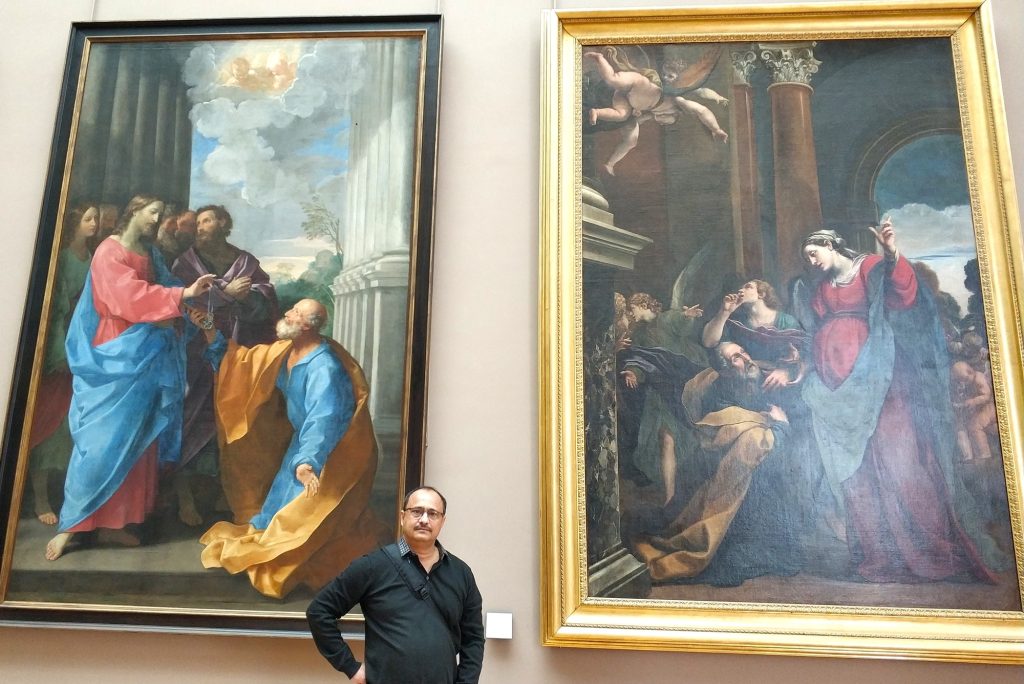
The Scandinavian section
We skipped the Scandinavian section because we had already seen them at a temporary display at the Louvre Abu Dhabi , but the richly textured worlds of the Flemish paintings by Rubens, Brueghel and Van Dyke and the Dutch paintings by Rembrandt, Vermeer and De Hooch are not to be missed.
In the works of Peter Paul Rubens, everything feels alive – flesh, fabric, movement – his paintings bursting with energy and drama. Mythological scenes swirl with motion, bodies twist and turn and every inch of the canvas seems to pulse with life.
Some notable works of Rubens are : Marie de’ Medici Cycle -A series of 24 monumental paintings depicting the life of Queen Marie de’ Medici.

Other notable works are : Hercules and Omphale, The Village Fête (La Kermesse) ,The Death of Dido ,The Disembarkation at Marseilles ,The Apotheosis of Henri IV ,Portrait of Marie de’ Medici as a Triumphant Queen etc.
In contrast, the detailed works of Pieter Brueghel draw you closer in a different way, inviting you to linger over bustling village scenes and tiny, almost hidden stories unfolding within them. There’s a quiet delight in discovering these small moments – peasants at work, children at play – each one adding to a larger tapestry of everyday life. His famous painting The Beggars (The Cripples) is displayed in the Louvre.

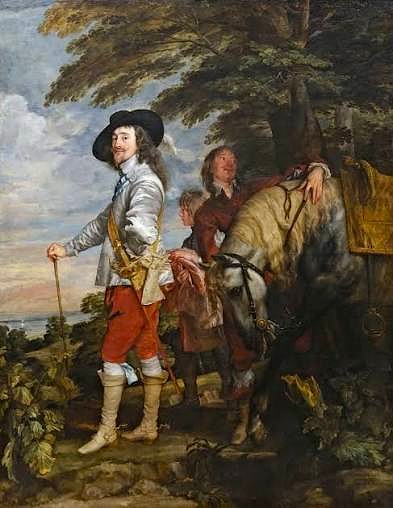
Anthony van Dyck’s portraits, meanwhile, exude elegance and poise. His figures stand tall and composed, draped in silks and shadows, their expressions restrained yet revealing. There’s a sense of aristocratic calm in his work, a window into a world of refinement and power. The Louvre houses around 34 paintings of van Dyke including the Charles I at the Hunt , Portrait of a Father and His Son, Portrait of a Lady with her Daughter and Madonna with Two Donors.
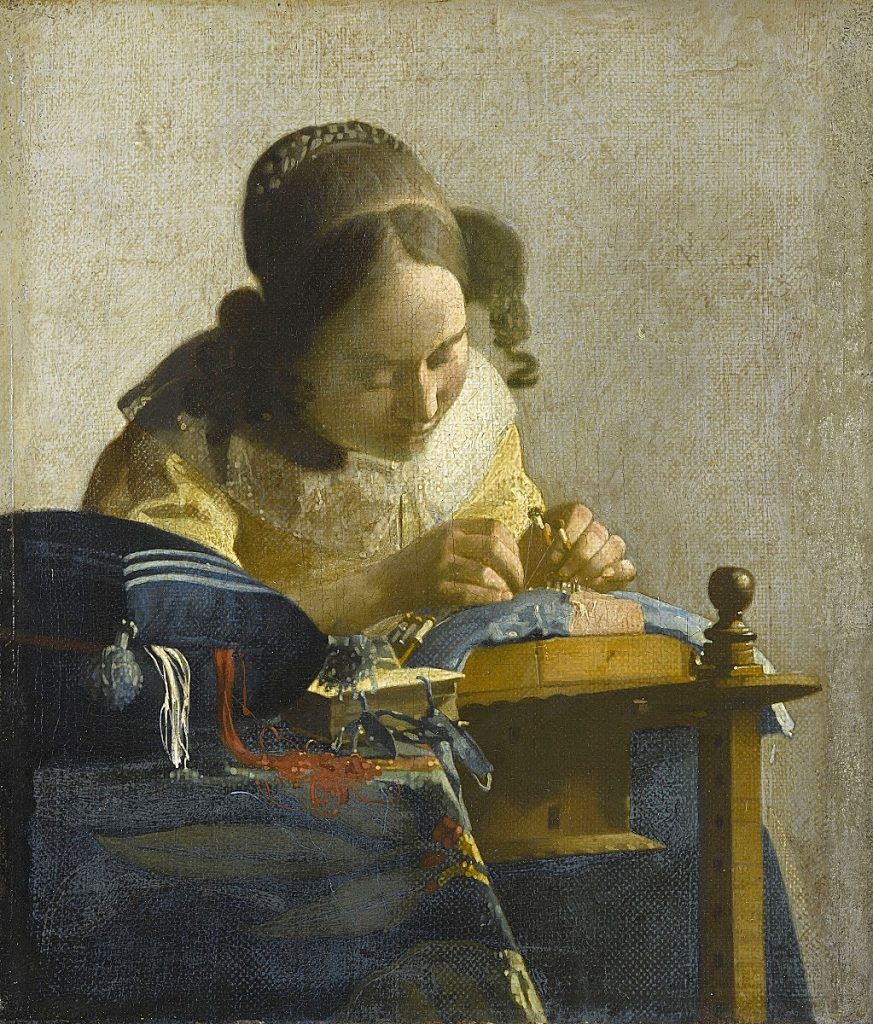
Johannes Vermeer offers a quieter, almost meditative experience – sunlight filters gently through windows, illuminating still interiors where time feels suspended.
Johannes Vermeer’s The Lacemaker is so small and delicate that it almost feels like a secret – her entire world reduced to a single act of concentration, threads slipping through her fingers as soft light gathers around her.
In The Astronomer, Vermeer shifts from the domestic to the cosmic, yet keeps the same stillness – here, a solitary figure bends over his instruments, caught in a moment of discovery, as if time itself has paused to let him think.
The Italian Painters
Then there are the other Italian painters apart from da Vinci.
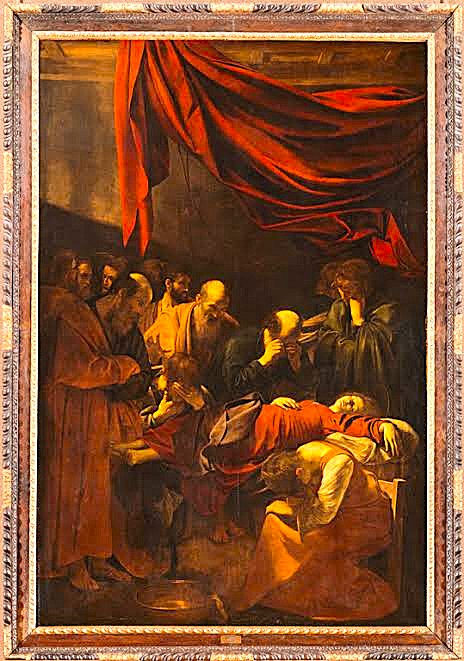
The Fortune Teller and Death of the Virgin by Caravaggio are other formidable paintings.
In The Fortune Teller, there’s a quiet tension beneath the seemingly simple exchange, a young man unknowingly being deceived, captured in a moment that feels both intimate and unsettling.
The Death of the Virgin is far more arresting, stripped of idealism, it presents the Virgin Mary not as divine, but as deeply human. The scene is heavy with grief, the figures grounded in reality, their sorrow almost tangible in the dim, dramatic light.
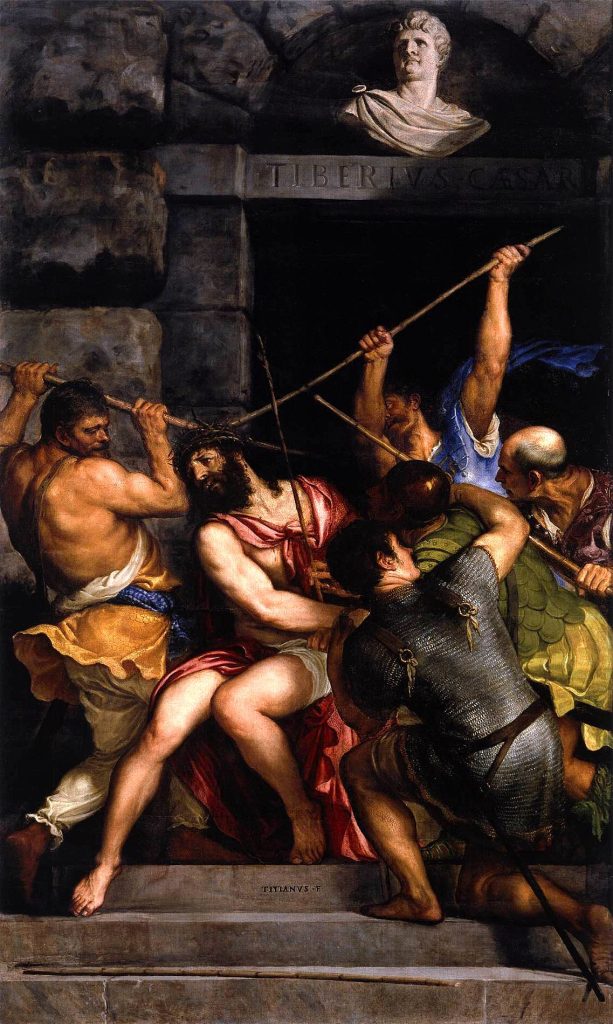
From 16th century Venice, the Louvre displays Titian’s Le Concert Champetre, The Entombment and The Crowning with Thorns.
Titian’s Le Concert Champêtre feels almost like a fleeting dream , figures gathered in a pastoral landscape, music and conversation blending into an atmosphere of quiet harmony.
In The Entombment, the weight of the moment is palpable, the figures straining under both physical and emotional burden as they carry Christ.
The Crowning with Thorns by Titian depicts Christ being mocked and crowned with thorns by Roman soldiers before his crucifixion. The dramatic lighting, intense colors, and powerful figures create a sense of suffering and tension, while Titian’s loose, expressive brushwork gives the scene an emotional intensity.
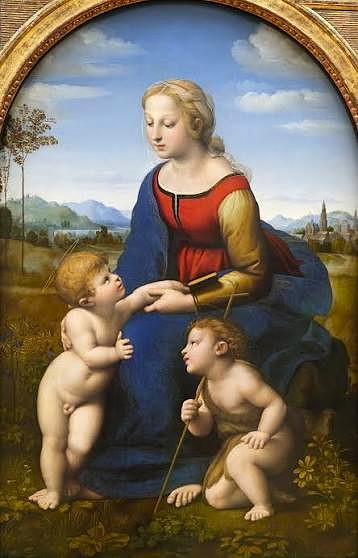
Then there’s Raphael with his La Belle Jardinière in which he depicts the Virgin Mary with the infant Jesus and the young John the Baptist in a peaceful countryside, symbolizing love, innocence and faith. Its harmonious composition, gentle expressions and vibrant landscape exemplify the beauty and balance of the Renaissance.
His Portrait of Baldassare Castiglione captures the elegance, intelligence and quiet confidence of the ideal Renaissance gentleman through its lifelike realism and subtle emotional depth.
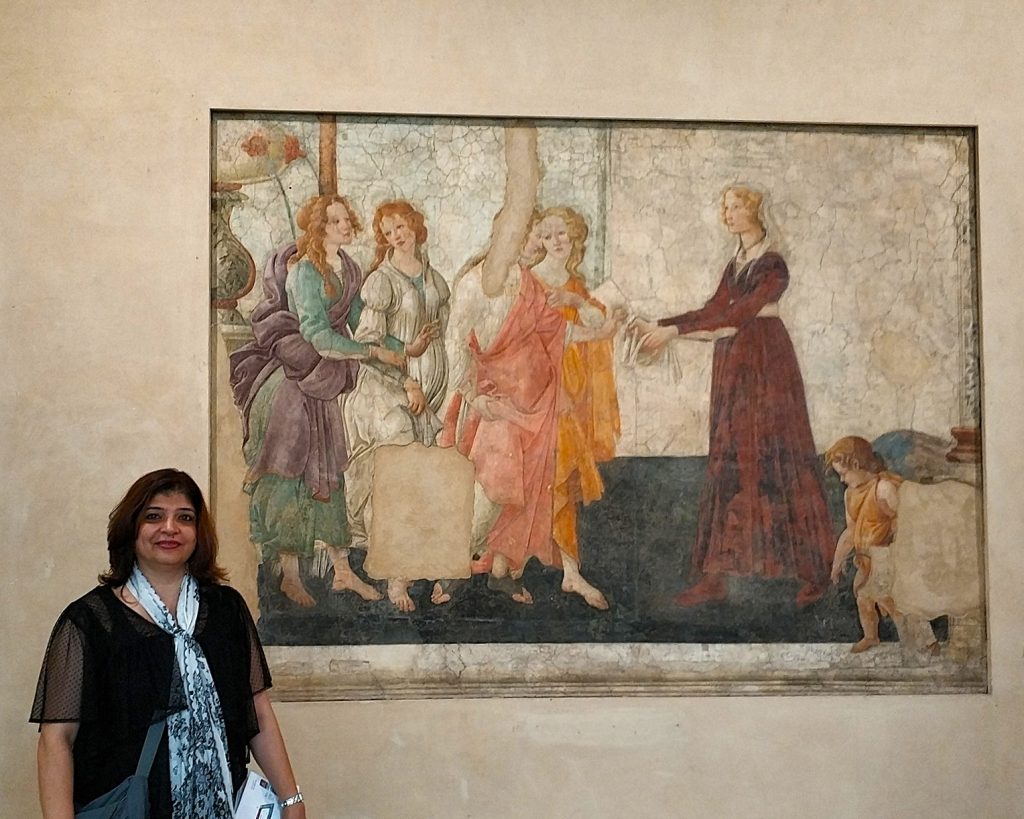
Venus and the Three Graces Presenting Gifts to a Young Woman : This elegant Renaissance painting by Sandro Botticelli depicts Venus and the Three Graces bestowing beauty, love and virtue upon a young woman. Rich in classical symbolism and graceful figures, it celebrates the ideals of harmony, femininity and divine inspiration.
Spanish Masterpieces
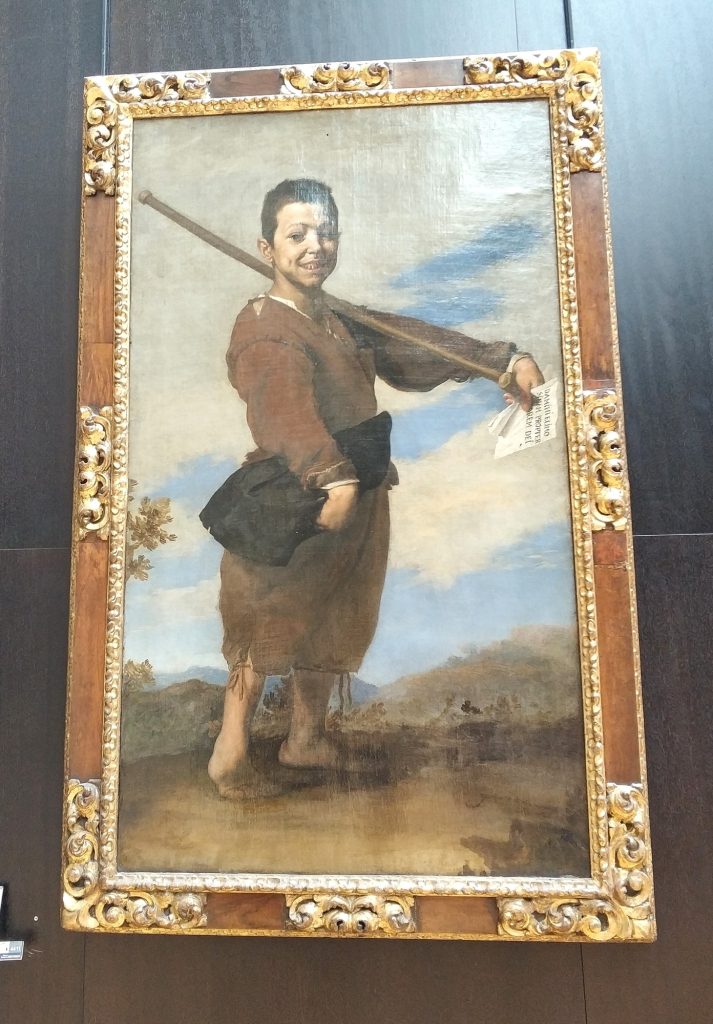
I also found the Spanish paintings very impressive. As you move further along, the Spanish masters bring with them a striking shift in tone – raw, emotional, and deeply human. Jusepe de Ribera’s The Clubfoot stops you in your tracks, not with grandeur, but with its honesty. The young boy, standing proudly despite his physical condition, meets your gaze with a quiet confidence that feels both disarming and moving. There’s dignity here, rendered in stark light and shadow, turning what could have been a subject of pity into one of strength. I particularly liked The Clubfoot by Jusepe de Ribera.
Then there are the paintings by Goya and El Greco.
El Greco’s works are known for their dramatic intensity, elongated figures and striking use of bold, expressive color, blending Byzantine tradition with Renaissance and Mannerist styles. His paintings often convey deep spirituality and emotional energy, creating a powerful, otherworldly atmosphere. His two most famous paintings in the Louvre are Christ on the Cross Adored by Two Donors , St Louis, King of France with a Page and Portrait of Antonio de Covarrubias.

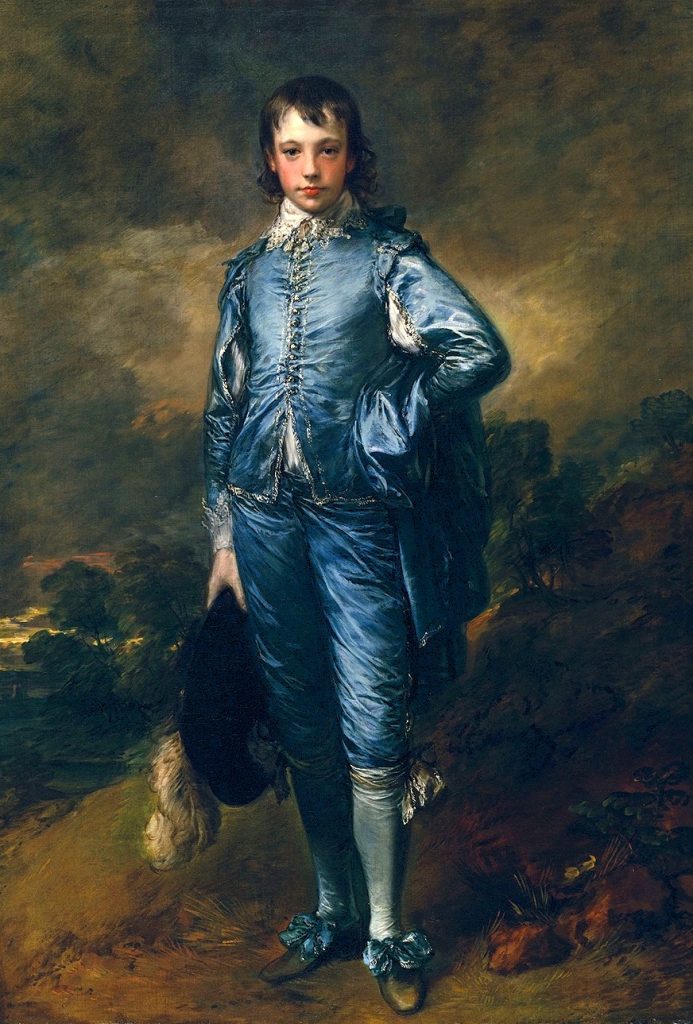
In the works of Francisco Goya – Woman with a Fan ,The Boy in Blue , Portrait of Ferdinand Guillemardet and Still Life with a Lamb’s Head – notable collections in the Louvre, that emotional intensity deepens. Goya’s paintings seem to carry an undercurrent of unease, whether capturing courtly life or something far darker, there’s always a sense that more lies beneath the surface. His figures feel real, flawed and often troubled, pulling you into a world where beauty and darkness exist side by side
The Sculptures
Next on the list were the endless sculptures most of which I can’t even remember. There are almost 10,000 sculptures and statues both outside and inside the Louvre. Most of them are spread across the Richelieu wing, the Denon wing and the Sully wing of the building.
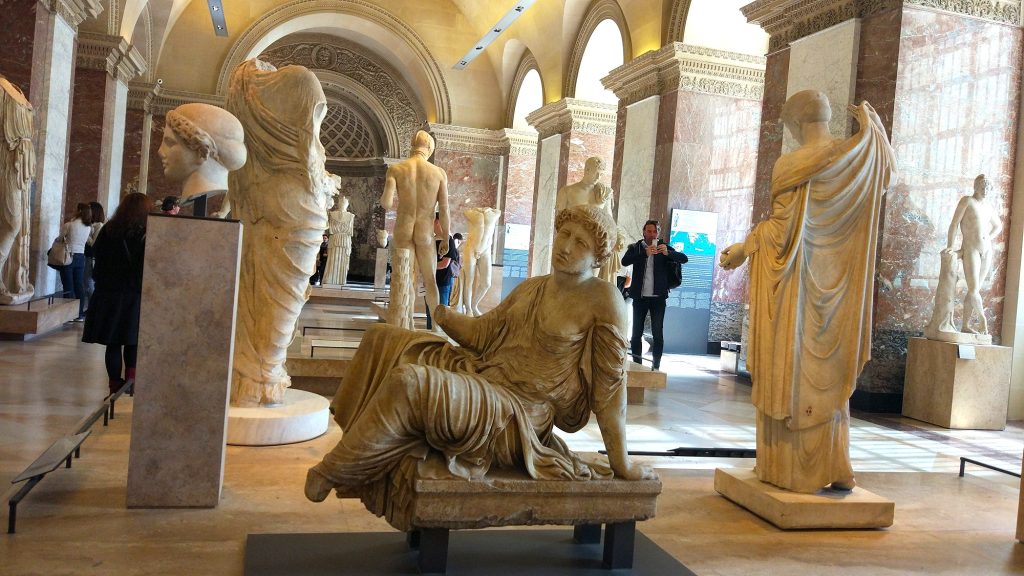
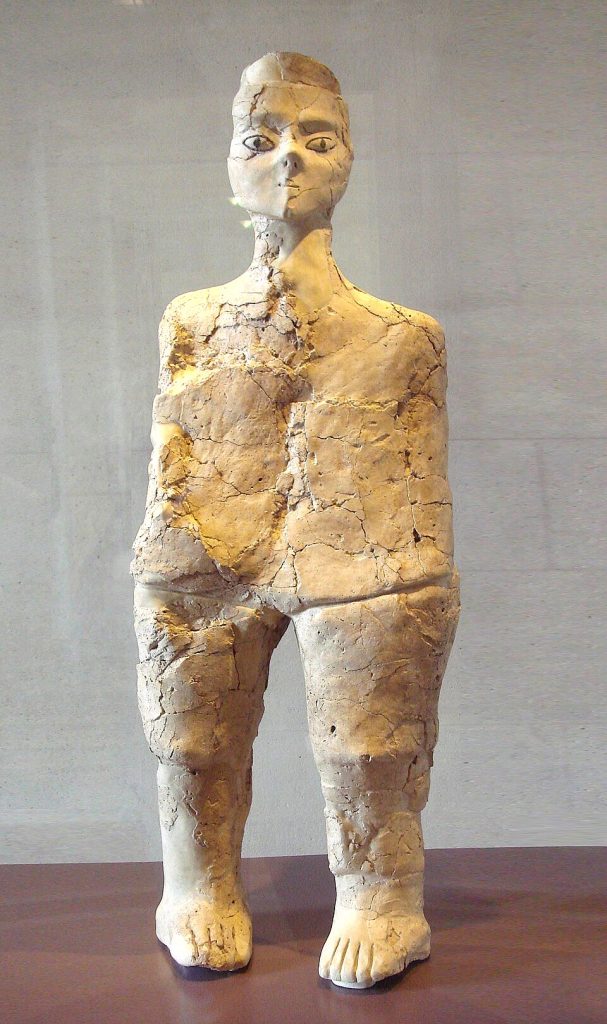
The Greek, Etruscan, and Roman department displays pieces from the Mediterranean Basin dating from the Neolithic period to the decline of the Roman Empire. This department is one of the museum’s oldest and all the displays are symbolic of classical art . The Ain Ghazal Statue is the oldest treasure in the museum from Jordan dating back to 7000 BCE.
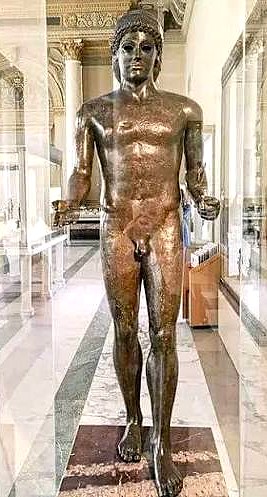
Among the most popular are the Greek Apollo of Piombino(5th century BCE); The Winged Victory of Samothrace (190 BC) ; the Venus de Milo (130 BC ), Lady of Auxerre,(640 BC); the Borghese Gladiator ( 100 BCE); Dying Seneca(2nd century AD), the Sleeping Hermaphroditos and many more.
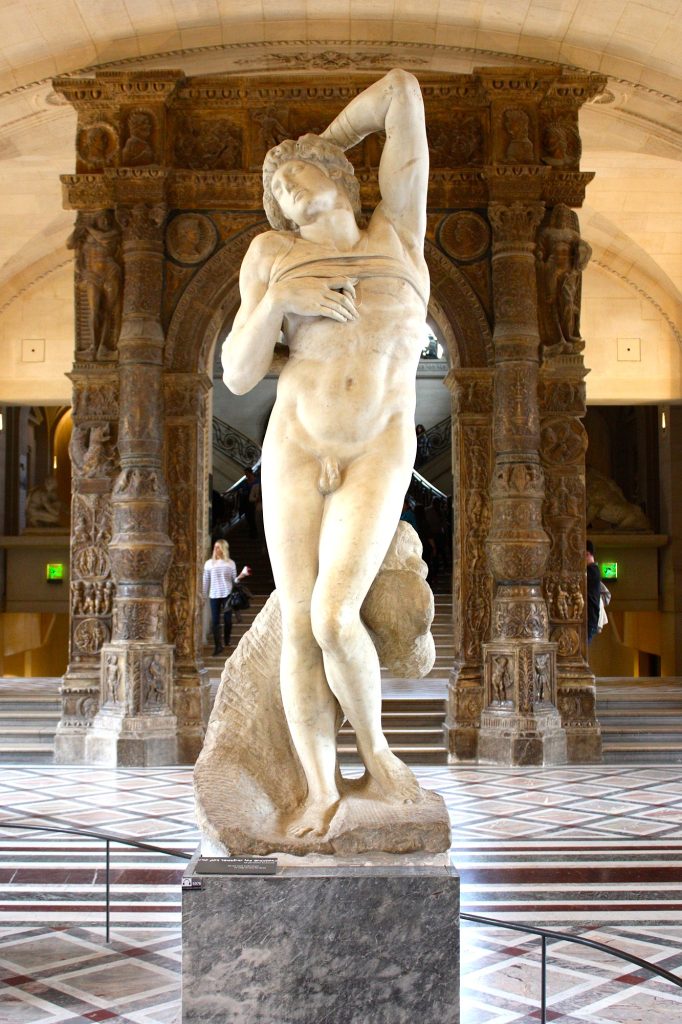
Then there are the statues which were influenced by all these ancient, classical statues , the most popular ones being the twin statues Michelangelo’s Dying Slave (1516) and Rebellious Slave (1513) and Antonio Canova’s Psyche Revived by Cupid’s Kiss (1787).
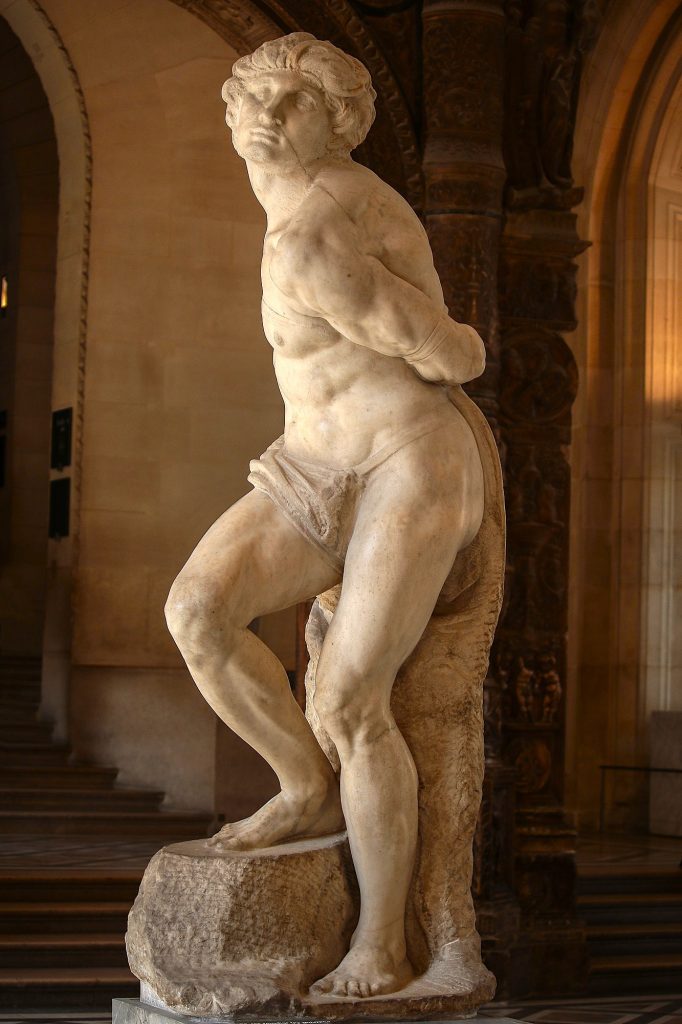
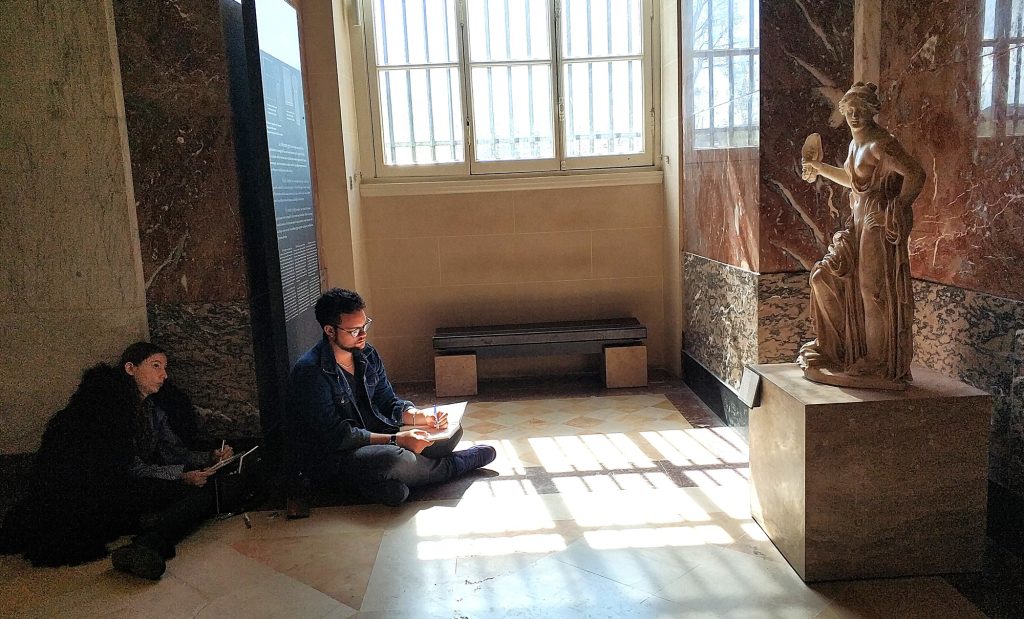
Walking into the sculpture galleries of the Louvre Museum feels like stepping into a timeline of human imagination carved in stone. Not only visitors but school-going students of all age groups as well as university art students visit the Louvre to gain firsthand experience and deepen their understanding of art.
One of the oldest and most haunting pieces you’ll encounter isn’t even Greco-Roman , it’s the Ain Ghazal Statues. Dating back to around 7000 BCE, these wide-eyed, almost otherworldly figures seem to look straight through you. Their simplicity and mystery make them feel surprisingly modern, despite being among the earliest large-scale human representations ever created.
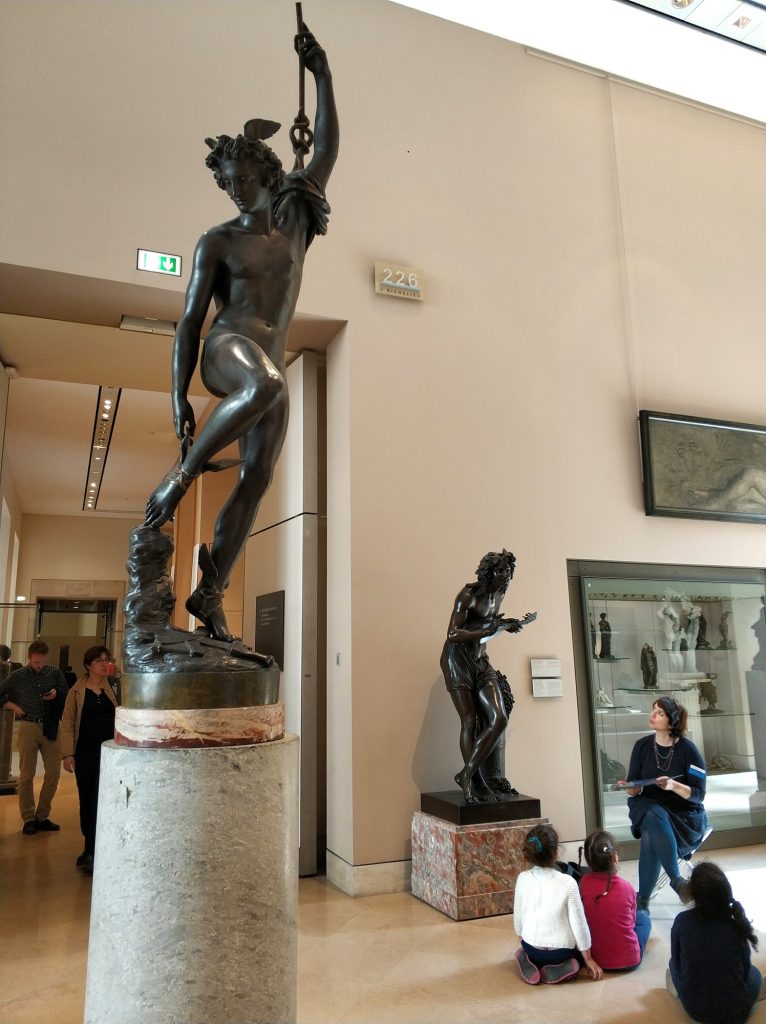
As you move forward in time, the galleries fill with the elegance and confidence of classical antiquity. The bronze Apollo of Piombino stands poised and idealized, embodying the Greek obsession with perfect form.
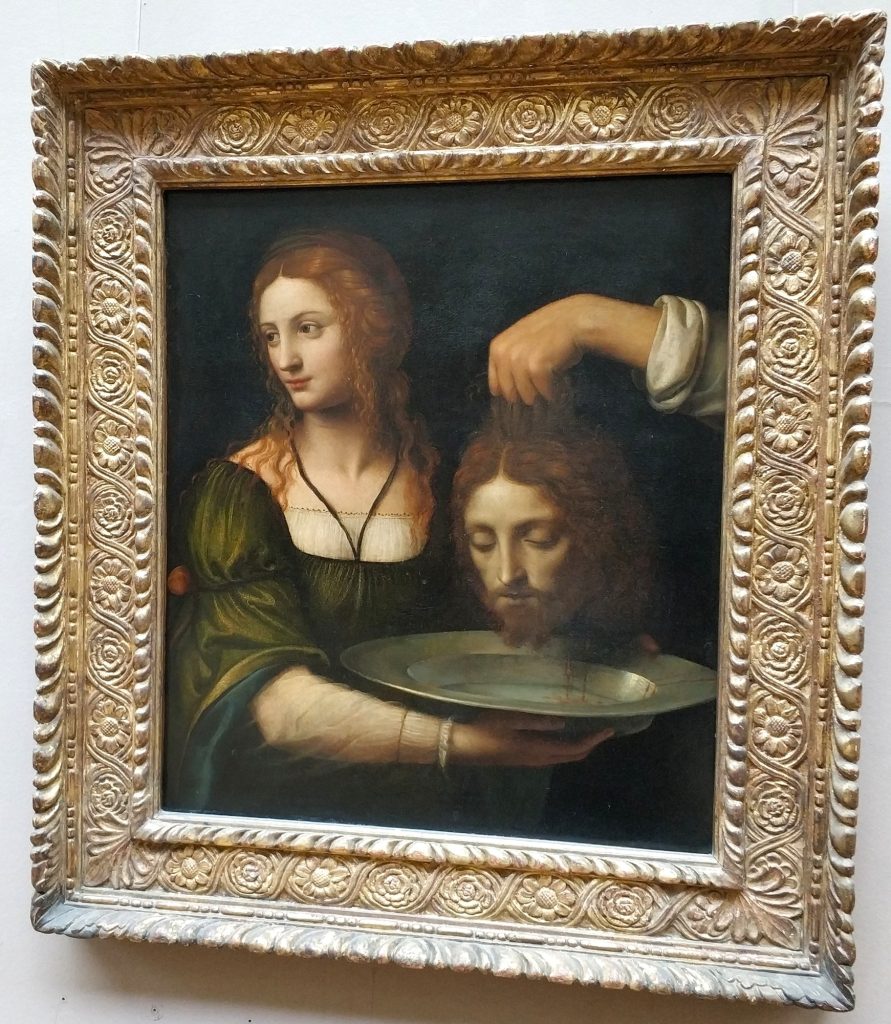
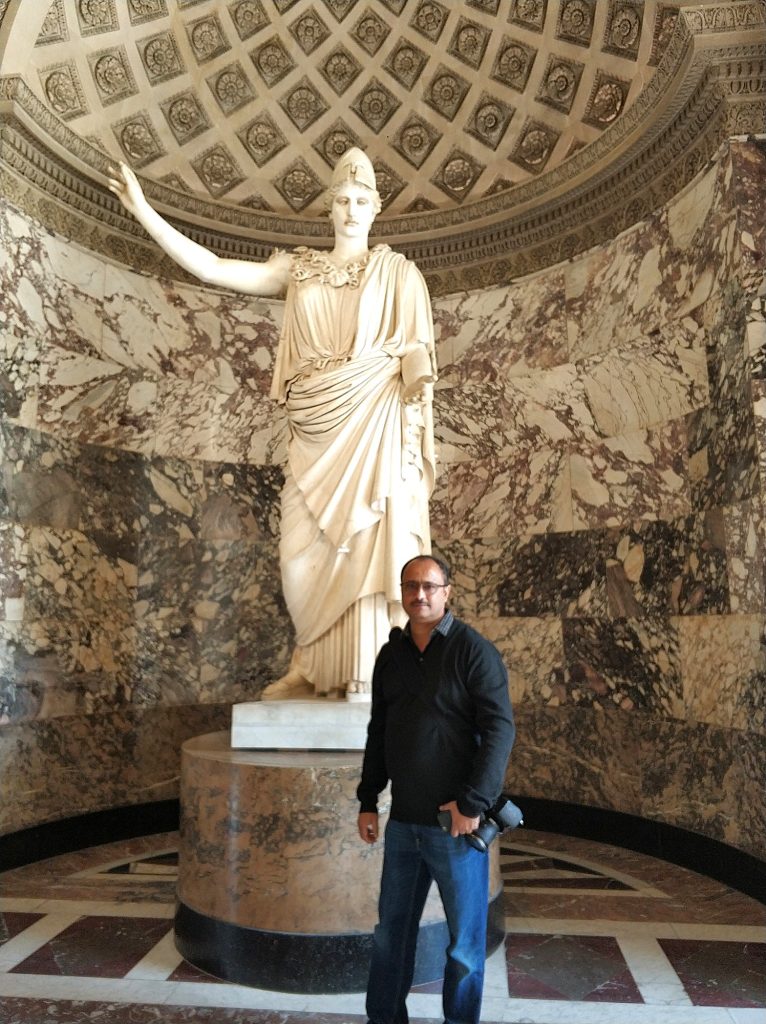
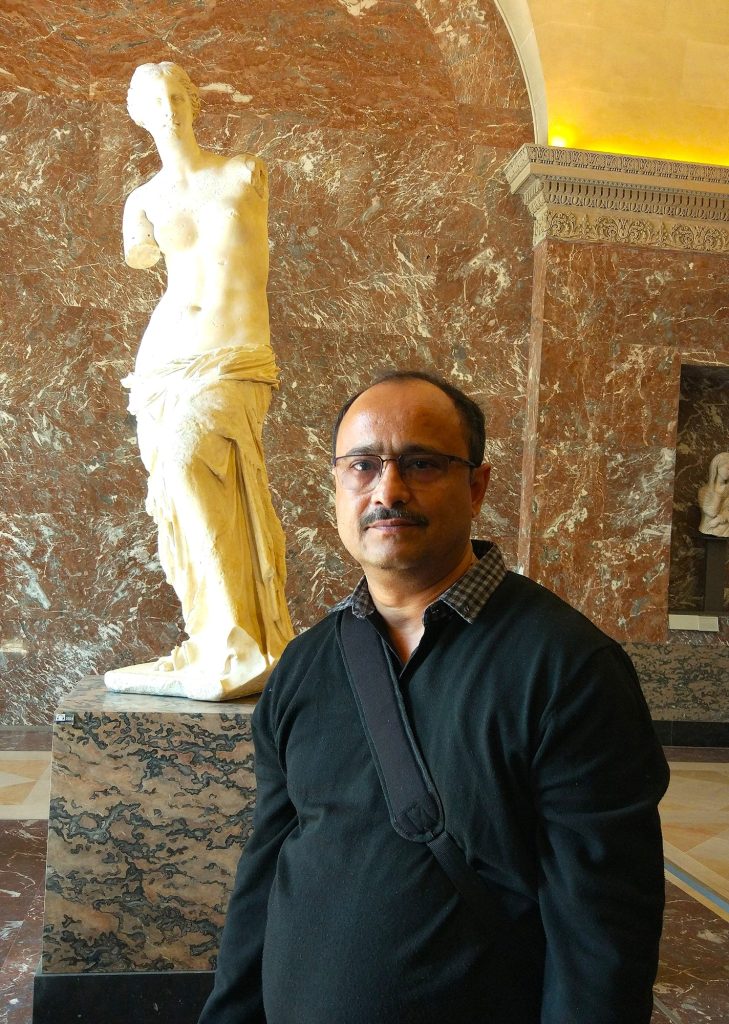
Then comes perhaps the museum’s most quietly captivating beauty: the Venus de Milo. Armless yet graceful, she draws you in not with grandeur, but with balance and serenity. Also Athena of Velletri ,standing upright in armor, typically wearing a helmet and aegis and holding a spear, created by the Cretan sculptor Kresilas , exudes the same grace and majesty. In contrast, the earlier Lady of Auxerre feels rigid and stylized, a reminder of how far artistic naturalism had yet to evolve.

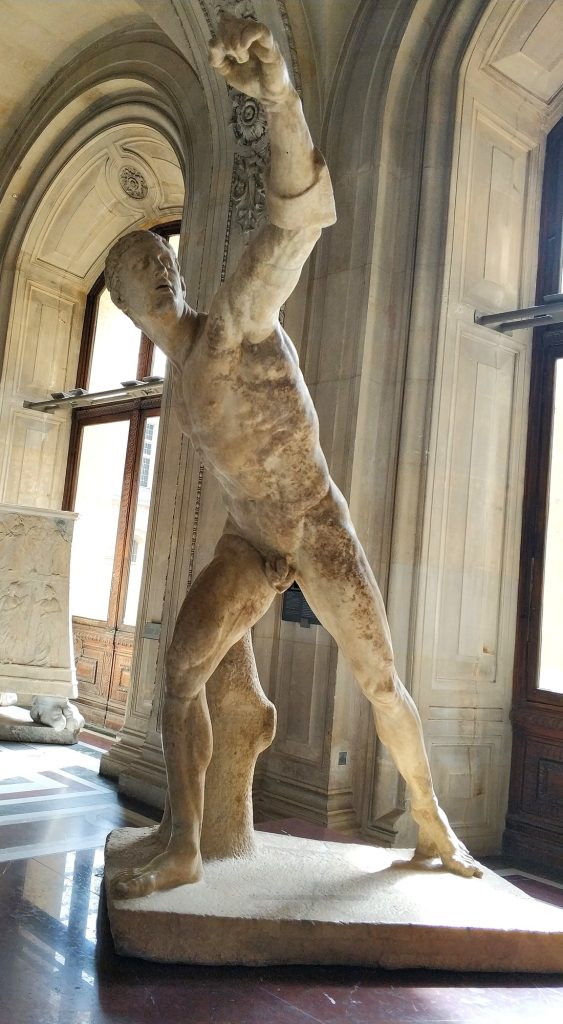
The Romans bring drama and emotion to the fore. The Borghese Gladiator is all tension and movement, muscles coiled in mid-action, while the so-called Dying Seneca captures the raw vulnerability of a collapsing figure.
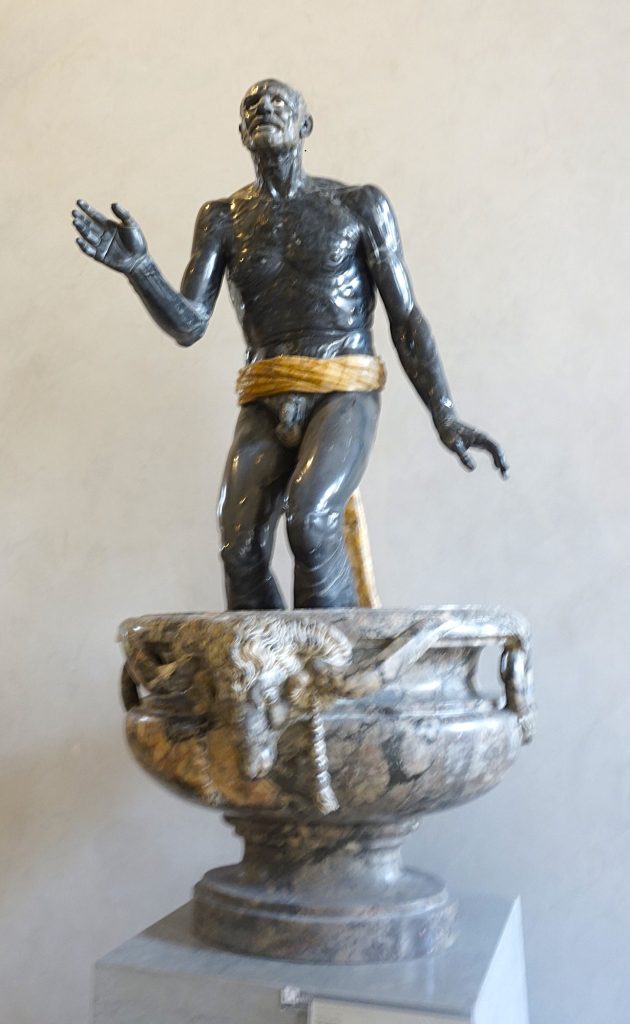
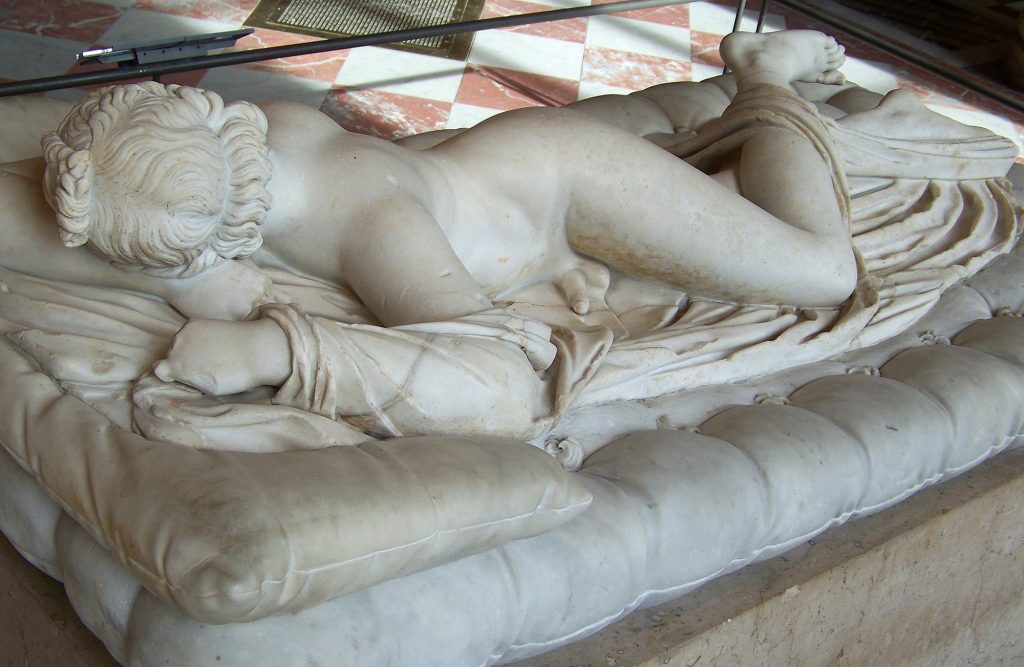
Nearby, the sensual and surprising Sleeping Hermaphroditus invites a double take. What first appears to be a reclining female form reveals a complex play on gender and perception.
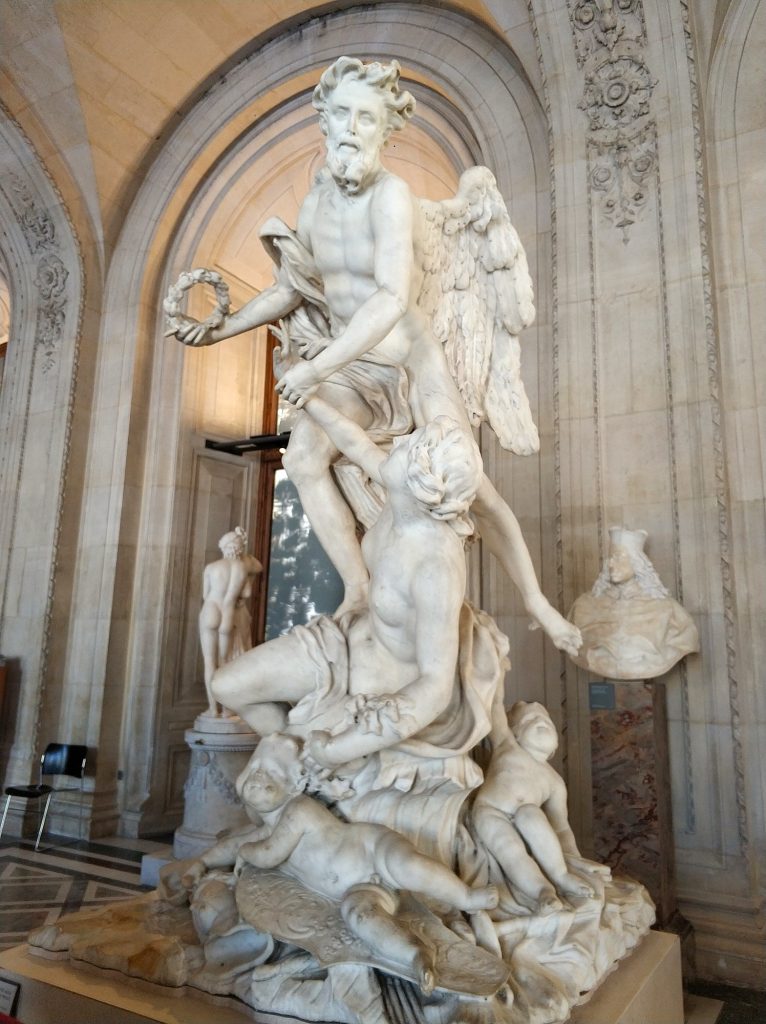
French sculptor Thomas Regnaudin
17th century

And just when you think the story ends with antiquity, the Renaissance pick up the thread. Inspired by these ancient masterpieces, artists returned to classical ideals with renewed emotion and intensity. Michelangelo’s twin sculptures—Dying Slave and Rebellious Slave feel almost alive. One seems to melt into resignation, the other strains against invisible bonds, their unfinished surfaces adding to their emotional power.
Finally, in the soft, theatrical elegance of Antonio Canova’s Psyche Revived by Cupid’s Kiss, marble becomes pure poetry. The moment of awakening – Cupid leaning in, Psyche reaching up – captures a tenderness that feels timeless, echoing the same fascination with the human form that began thousands of years ago.
By the time you leave these halls, you realize you haven’t just seen sculptures, you’ve witnessed a continuous conversation across millennia, from the first human figures of Jordan to the refined ideals of Renaissance Europe.
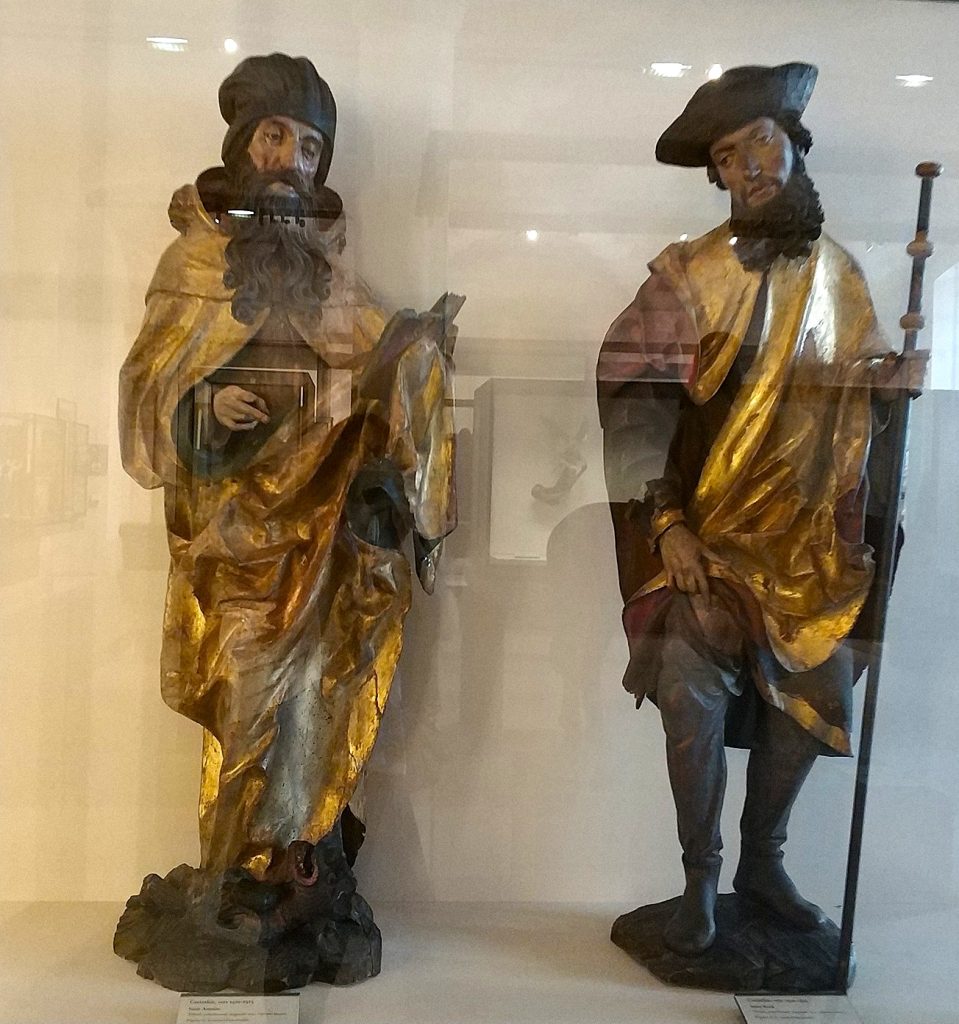
A Break and a Rest
After achieving the unimaginable task of covering almost what seemed to us a major part of paintings and sculptures we needed a break. We sat in the Louvre’s huge and contrastingly modern lobby surrounding the glass pyramid ,replenished ourselves with food and water and checked what was left. Samit and Titir had already called it a day but to my dismay it seemed we had covered only one third of what was left. So with renewed vigour I ticked out a few ‘must sees’ and went off all alone to conquer them! And did so with super-lightning speed because I completed the rest and was back to where they were waiting within an hour.
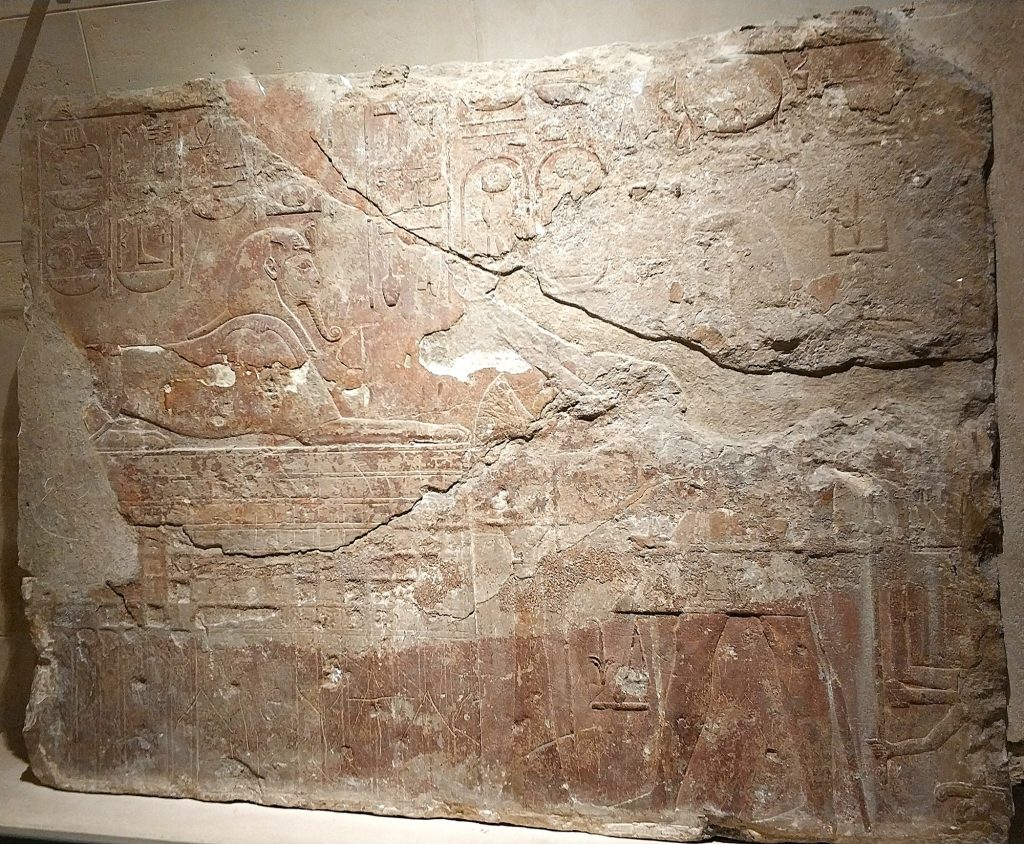
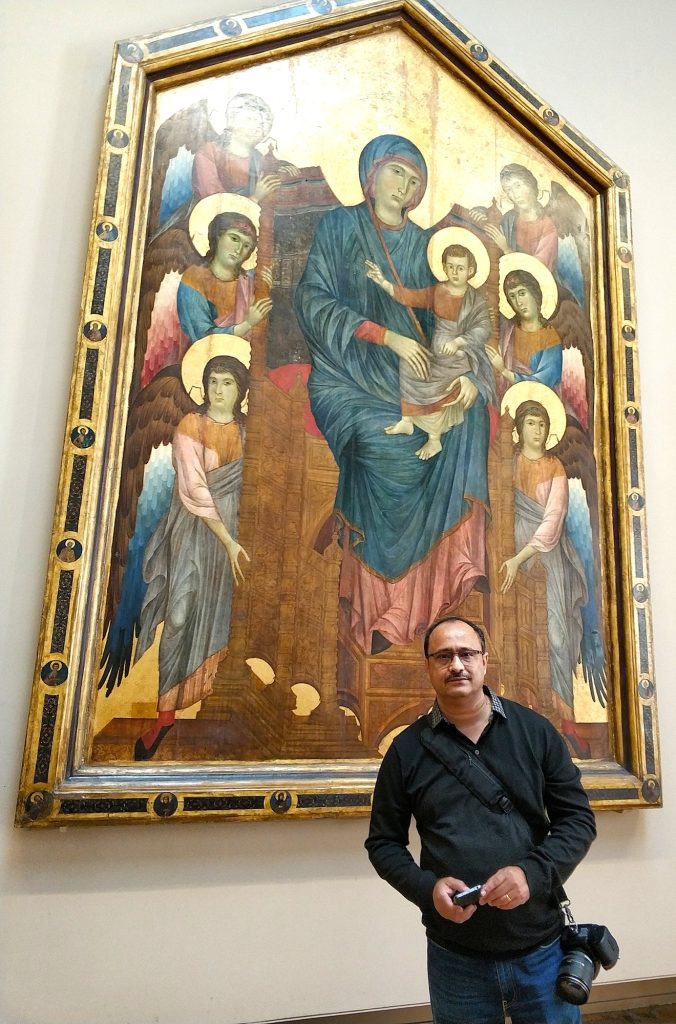
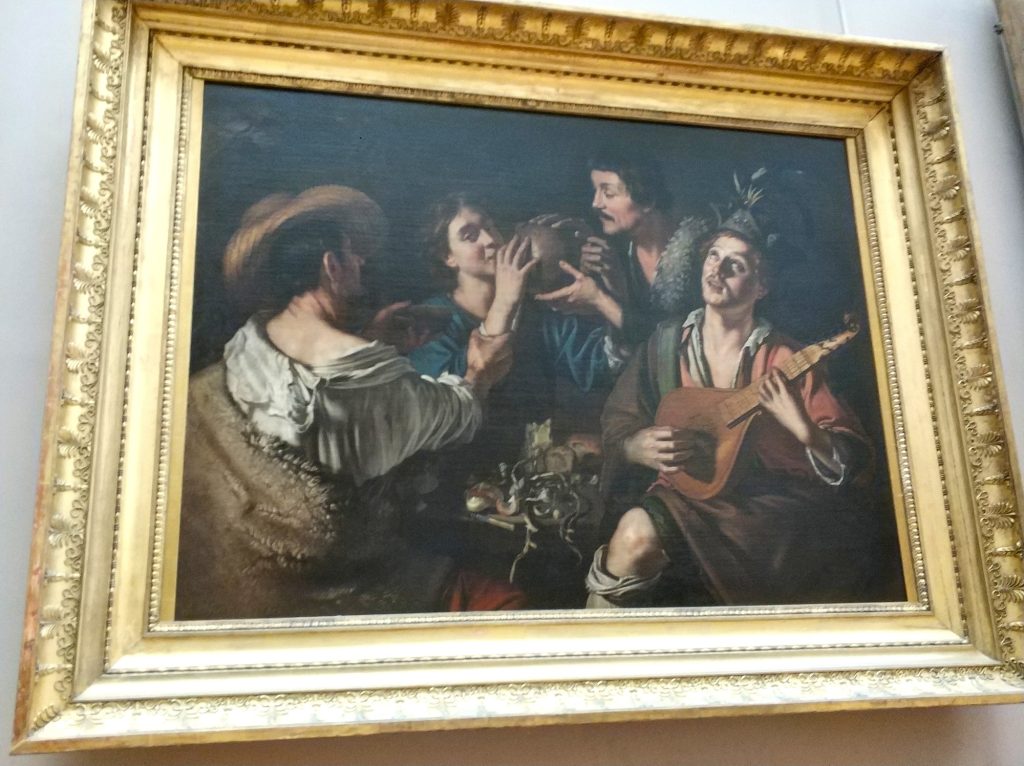
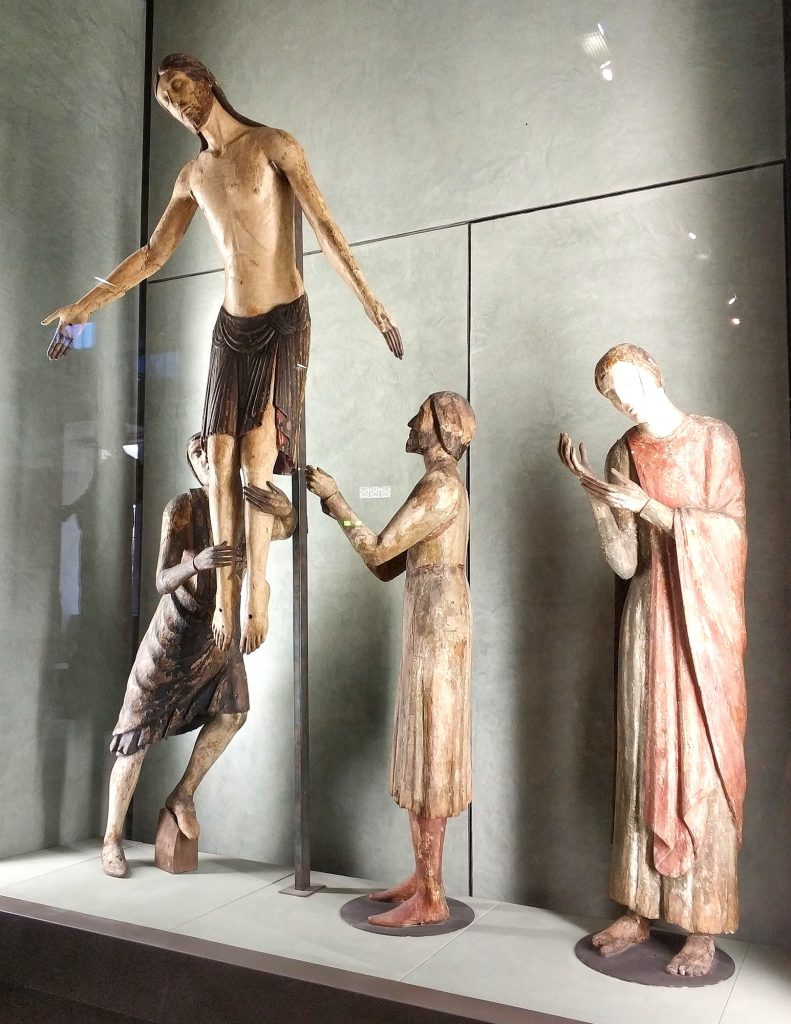
The list mainly covered the Egyptian antiquities , Near Eastern antiquities and chambers of Napolean III. I had to omit decorative arts but there was this magnificent ,wooden statue of Mary Magdalene by Gregor Erhart ,a German sculpture of the 15th century which I had to see but couldn’t make sense why it was kept in an altogether different department far from the rest .
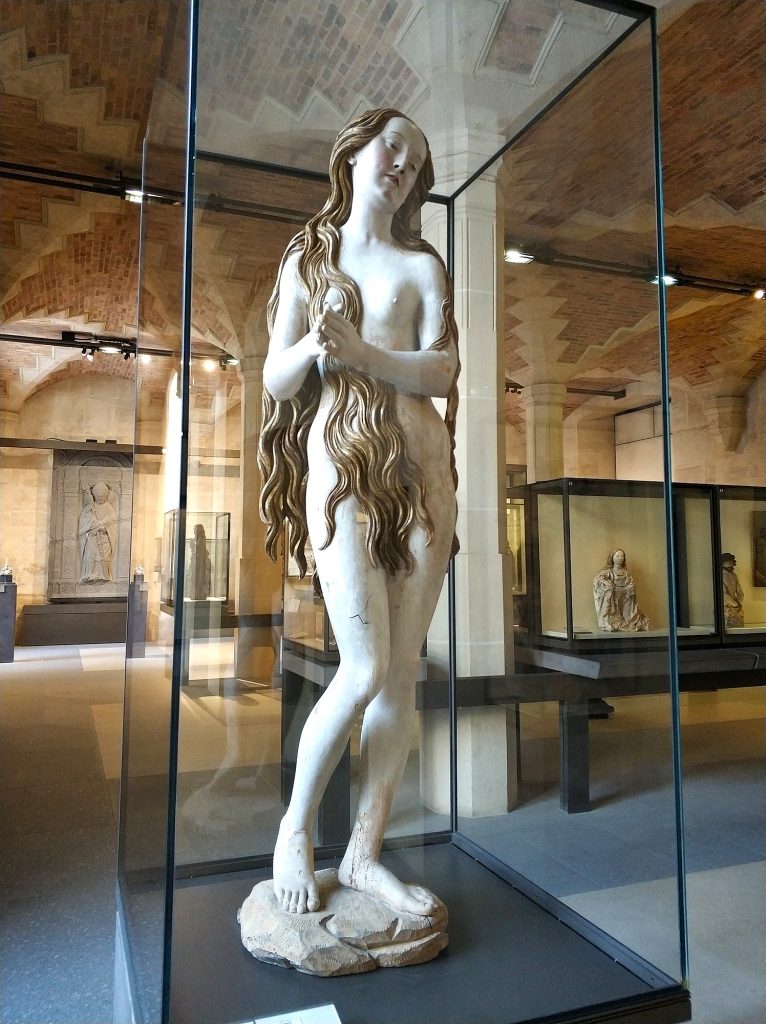
This striking wooden sculpture of Mary Magdalene captures her in a moment of deep penance and devotion. Carved in the early 16th century, she is shown almost ethereal, her long flowing hair covering her body, symbolizing both modesty and spiritual transformation. The delicacy of the carving, especially in the hair and expression, gives her a haunting, almost weightless presence. It reflects late Gothic artistry transitioning into the emotional realism of the Renaissance.
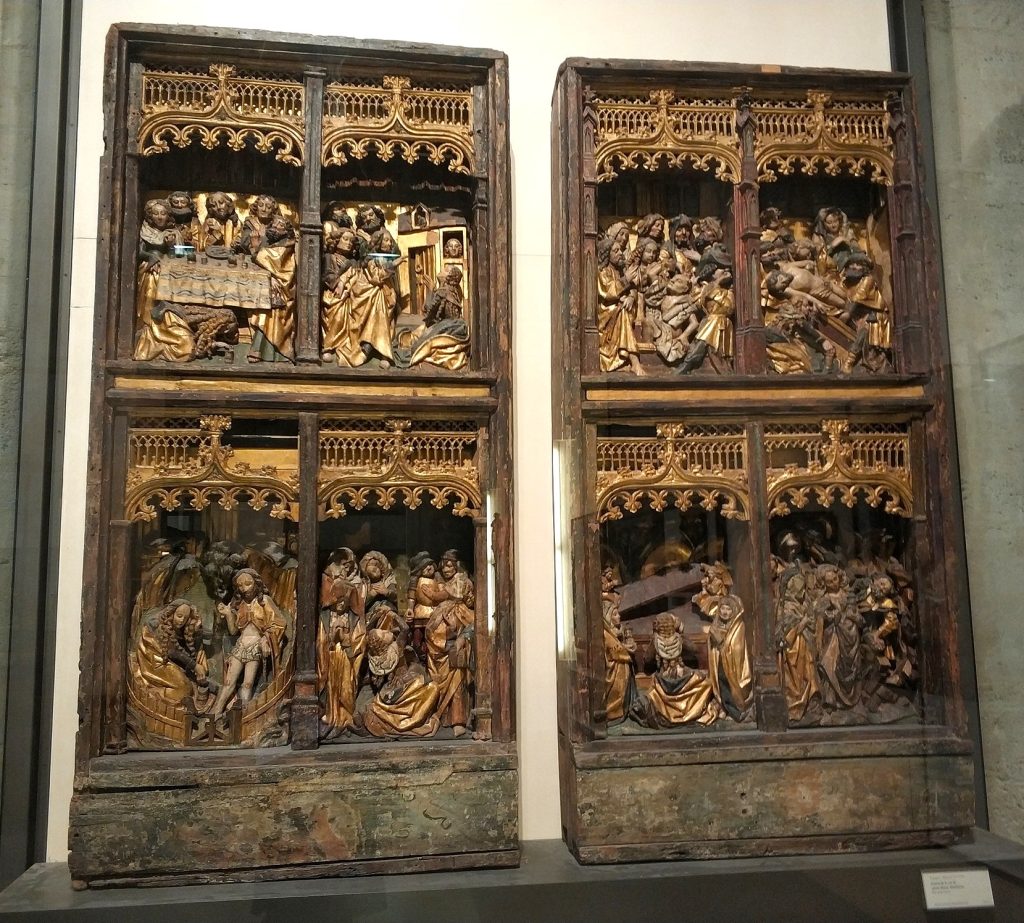
Beyond the paintings and sculptures, the Louvre Museum unfolds like an archaeological journey through entire civilizations – each room revealing a different world, preserved in astonishing detail.
Among these archeological marvels, the ones not to be missed are the Law Code of Hammurabi, the Crown of Louis XV, the Winged human-headed bulls of Khorsabad, the Four Seasons which are tin-glazed pottery, the Frieze of Archers , the colossal statue of the Ramses II, the Great Sphinx of Tanis ,the Seated Scribe , Napoleon III Apartments and remnants of the medieval Louvre fortress in the basement.
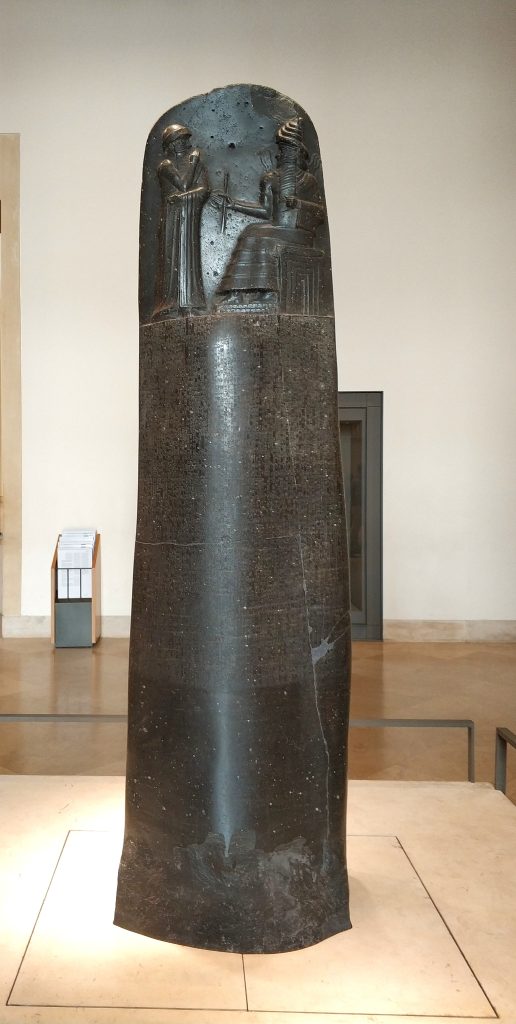
Code of Hammurabi
One of the most powerful objects you’ll encounter is the Code of Hammurabi – a basalt stele dating to around 1754 BCE. Standing tall in dark stone, it isn’t just a relic, it’s one of the earliest and most complete written legal systems in human history. Created by King Hammurabi of Babylon, it established laws covering crime, trade, family and property, emphasizing justice through the principle of ‘an eye for an eye ‘. Carved out at the top, the Babylonian king receives divine authority; below, dense lines of cuneiform script lay out laws that governed everyday life thousands of years ago. It’s humbling to stand before something that shaped the very idea of justice.
Frieze of Archers
From Mesopotamia, you move into the grandeur of ancient Persia.The brilliantly preserved Frieze of Archers stretches across the walls in repeating patterns of richly dressed guards, their colors still vivid after centuries. The Frieze of Archers comes from the Palace of Darius I at Susa in ancient Persia and dates to the 6th century BCE. Made from brightly colored glazed bricks, it depicts elite Persian archers, symbolizing the strength and discipline of the Achaemenid Empire.
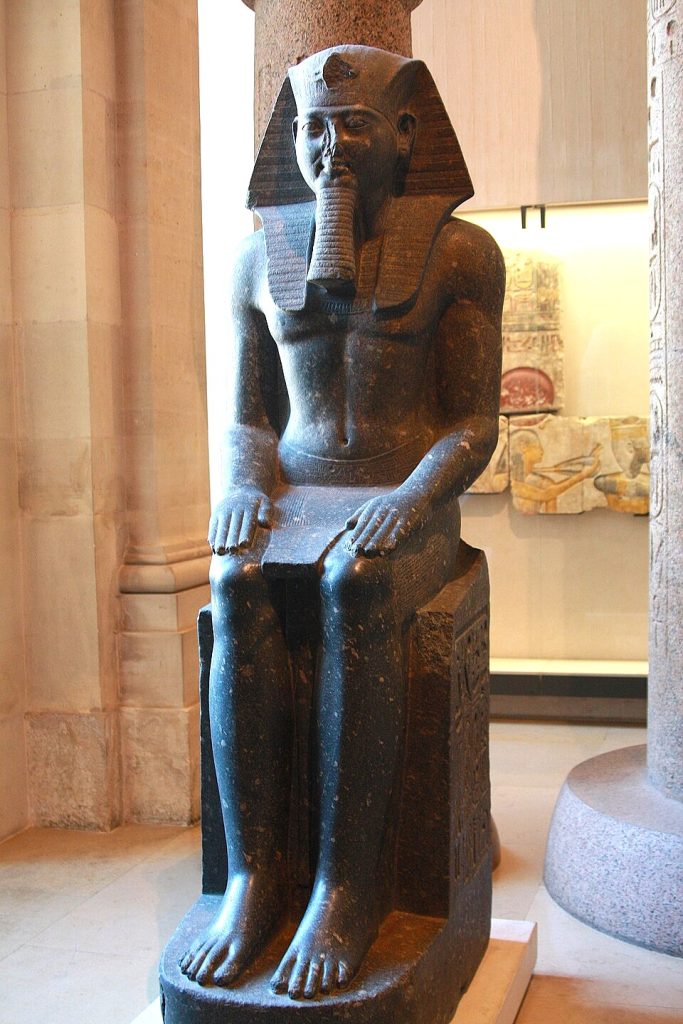
Colossal Statue of Ramesses II
Colossal Statue of Ramesses II
Egypt’s galleries feel vast and eternal. The colossal Statue of Ramesses II dominates its space, projecting power and permanence. This massive granite statue portrays Pharaoh Ramesses II, one of ancient Egypt’s greatest rulers, who reigned during the 13th century BCE. The sculpture reflects his authority, military achievements and divine status through its impressive scale and idealized features.
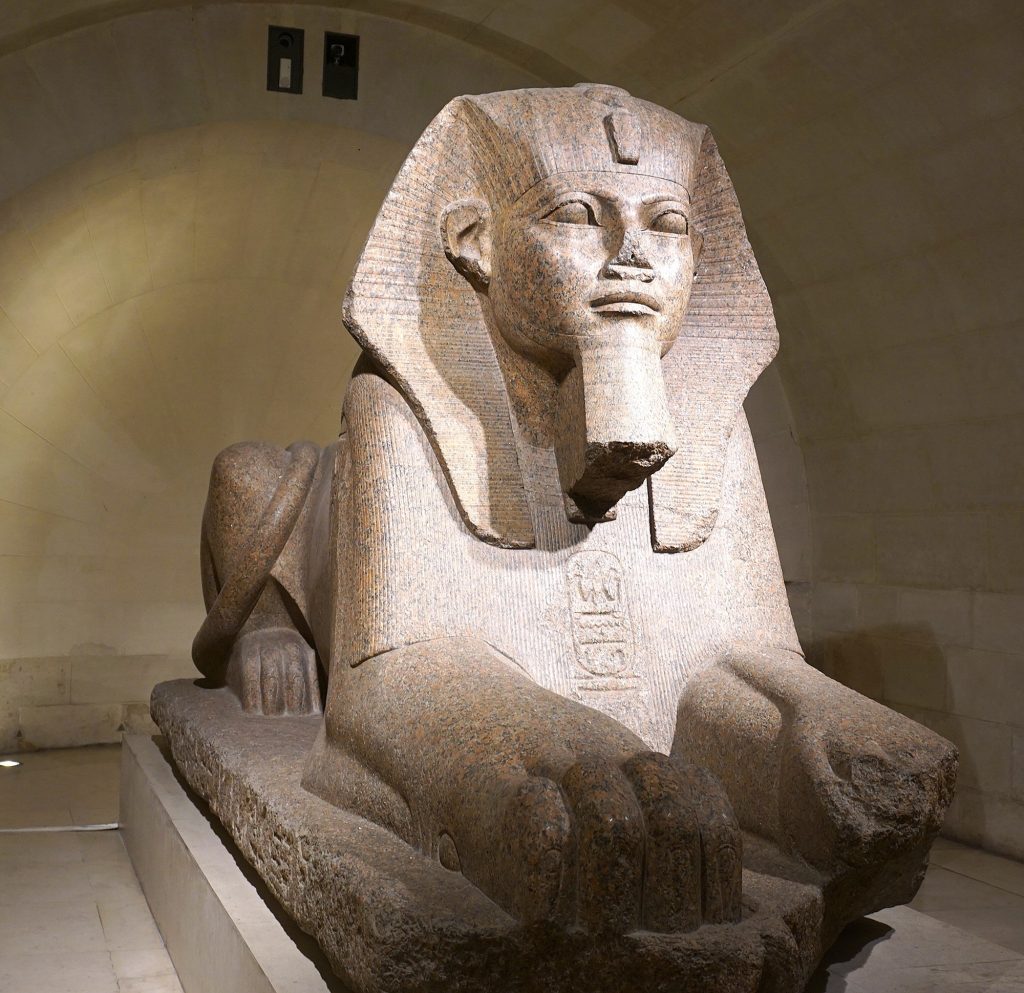
Great Sphinx of Tanis
Nearby, the Great Sphinx of Tanis blends human intelligence with animal strength; its weathered face carrying an air of mystery. The Great Sphinx of Tanis is a granite sculpture with the body of a lion and the head of a Pharaoh, probably carved during Egypt’s Middle Kingdom and later reused by subsequent rulers. It symbolizes royal power, protection and the Pharaoh’s connection to the gods.
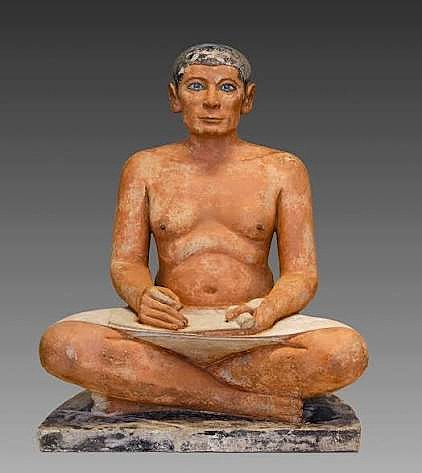
The Seated Scribe
In contrast, the Seated Scribe feels surprisingly intimate – his inlaid eyes alert, posture attentive, as if he might resume writing at any moment. The Seated Scribe is a painted limestone sculpture from ancient Egypt dating to about 2600–2350 BCE. Unlike idealized statues of pharaohs, it realistically portrays an educated official with attentive eyes, emphasizing the important role of scribes in Egyptian administration.
The Four Seasons
The decorative arts galleries shift the mood entirely. The Four Seasons is a set of richly decorated tin-glazed earthenware pieces representing spring, summer, autumn, and winter. Created during the Renaissance, they demonstrate the artistic mastery of colorful glazed ceramics and allegorical storytelling.The intricate beauty of The Four Seasons showcases the refinement of European craftsmanship, each piece delicately painted and rich in detail.
The Crown of Louis XV
Then comes pure royal opulence: the dazzling Crown of Louis XV, made of gold and decorated with precious gems, it symbolizes the power and prestige of the French monarchy before the French Revolution. The Crown of Louis XV was created for his coronation in 1722 and is one of the few surviving French royal crowns.
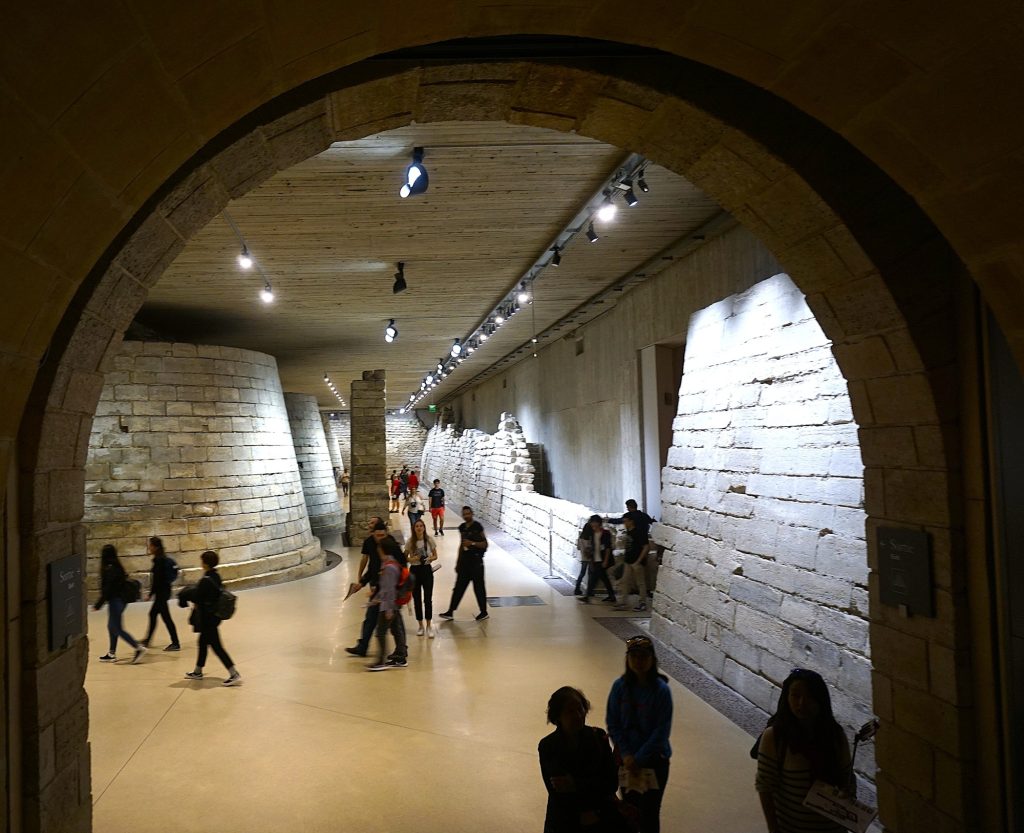
Remnants of the Medieval Louvre Fortress (Basement)
Almost hidden beneath all this splendor, lies the museum’s own past. Beneath the Louvre Museum are the preserved foundations and defensive walls of the original medieval fortress built by King Philip II around 1190. These remains reveal the Louvre’s origins as a military stronghold before it became a royal palace and eventually one of the world’s greatest museums.
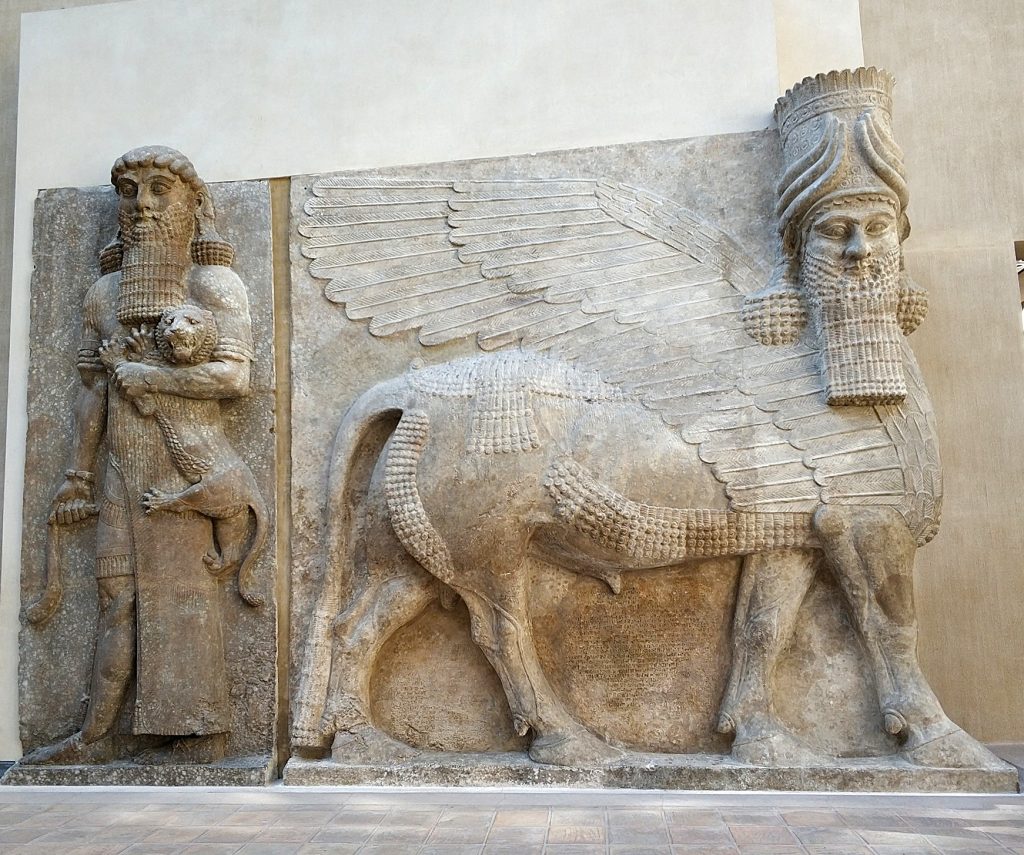
Winged human-headed bulls of Khorsabad
Not far away from the Archers, the monumental Assyrian sculptures, known as Lamassu, stand watch ; part human, part animal, entirely imposing. These guardian figures once protected palace gates and even now, they radiate quiet authority. These figures guarded the entrances to the palace of King Sargon II at Khorsabad in the 8th century BCE. Combining the body of a bull, the wings of an eagle and the head of a human, they represented strength, wisdom, and divine protection.
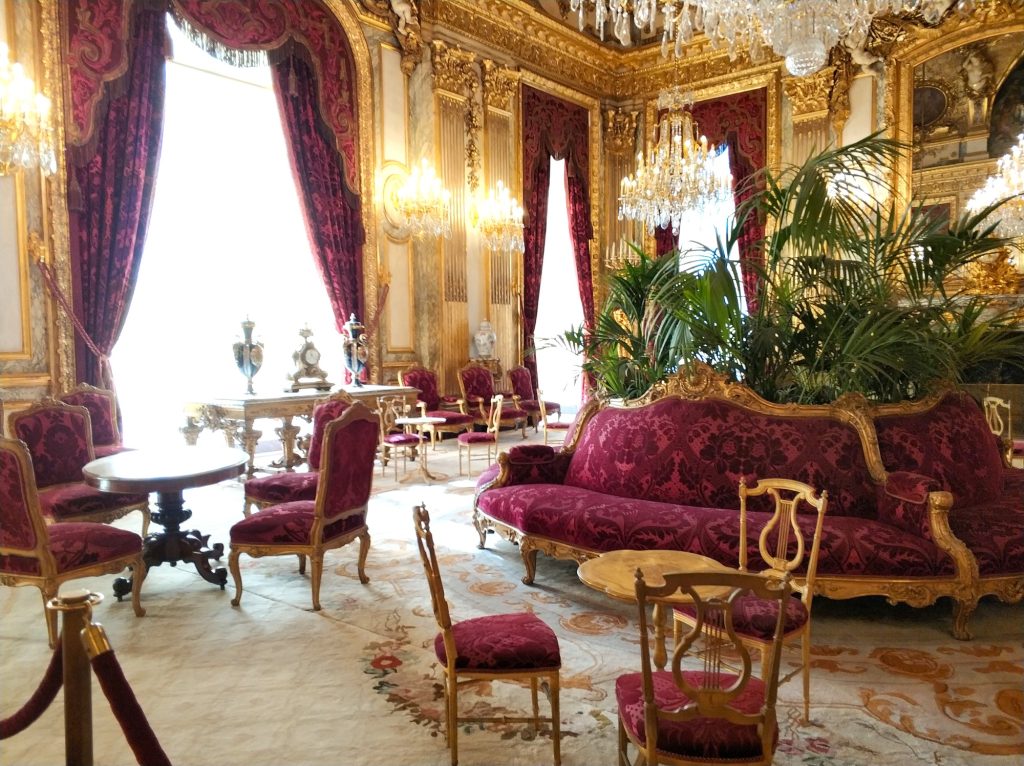
Napoleon III Apartments
The Napoleon III Apartments are lavishly decorated rooms in the Louvre that preserve the luxurious style of the Second French Empire in the mid-19th century. Filled with red velvet, crystal chandeliers, gilded ceilings and richly furnished interiors, they showcase the opulence of imperial France. These rooms feel frozen in time, offering a glimpse into the extravagant lifestyle of 19th century French royalty – ornate, theatrical and unapologetically grand.
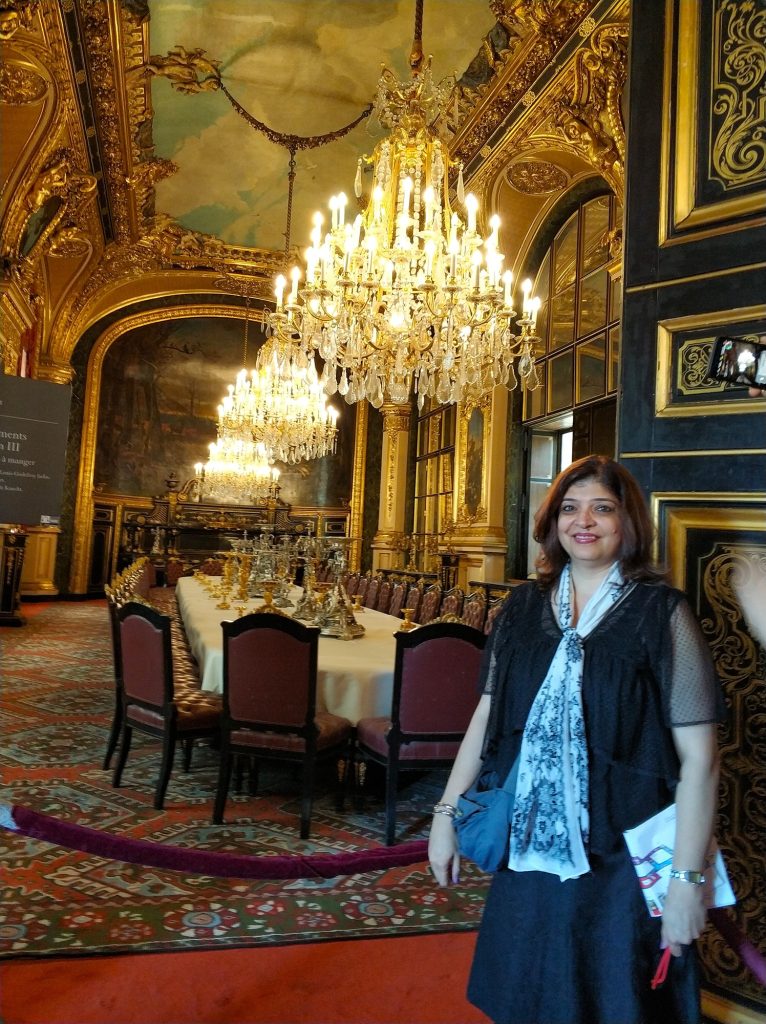
By the end of it, the Louvre feels less like a single museum and more like a layered time capsule – where ancient law, royal luxury, and architectural history all co-exist under one vast roof.
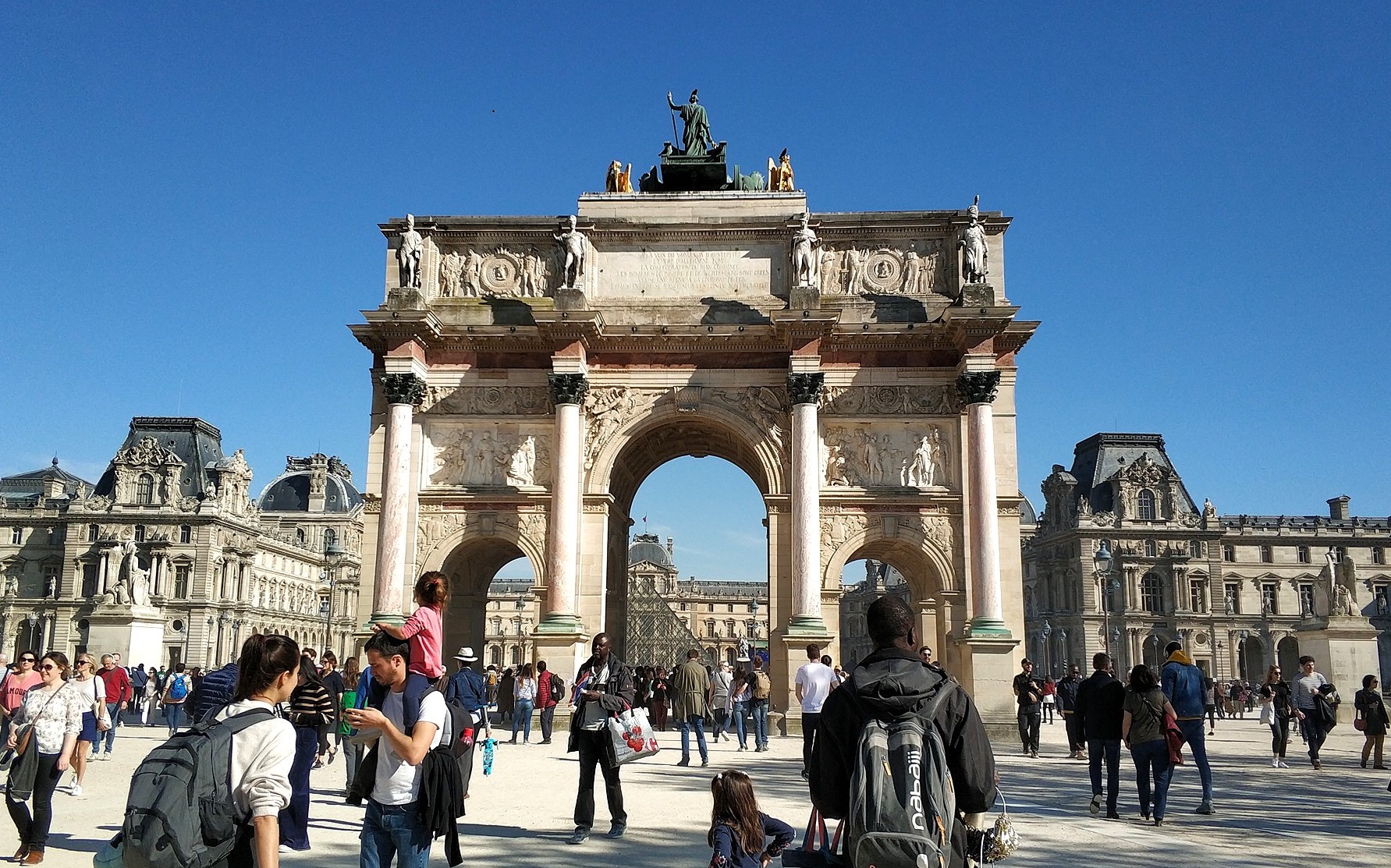
After exploring the Louvre, we stepped outside into the courtyard, where we took photos in front of the Arc du Carrousel and enjoyed the beautiful Tuileries Garden.
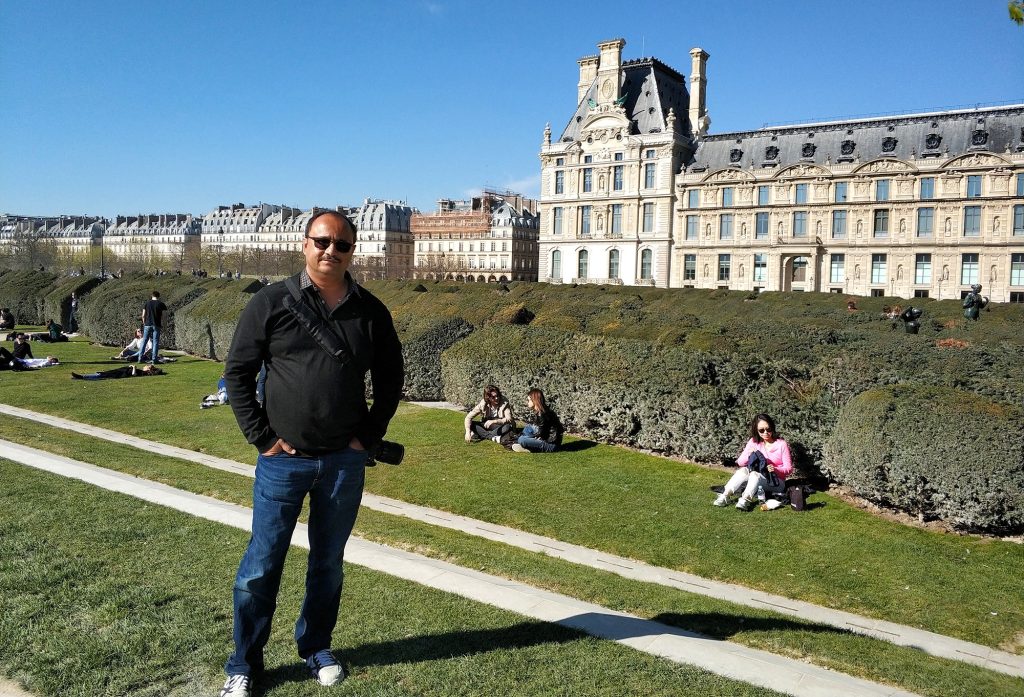
The Tuileries Garden is a beautiful historic French formal garden stretching from the Louvre toward the Place de la Concorde, with tree-lined paths, fountains, sculptures and open lawns.
At its eastern end stands the Arc de Triomphe du Carrousel, a monumental three-arched structure built under Napoleon to celebrate his military victories. Together, the garden and arch create a grand axis connecting the Louvre with the heart of Paris.
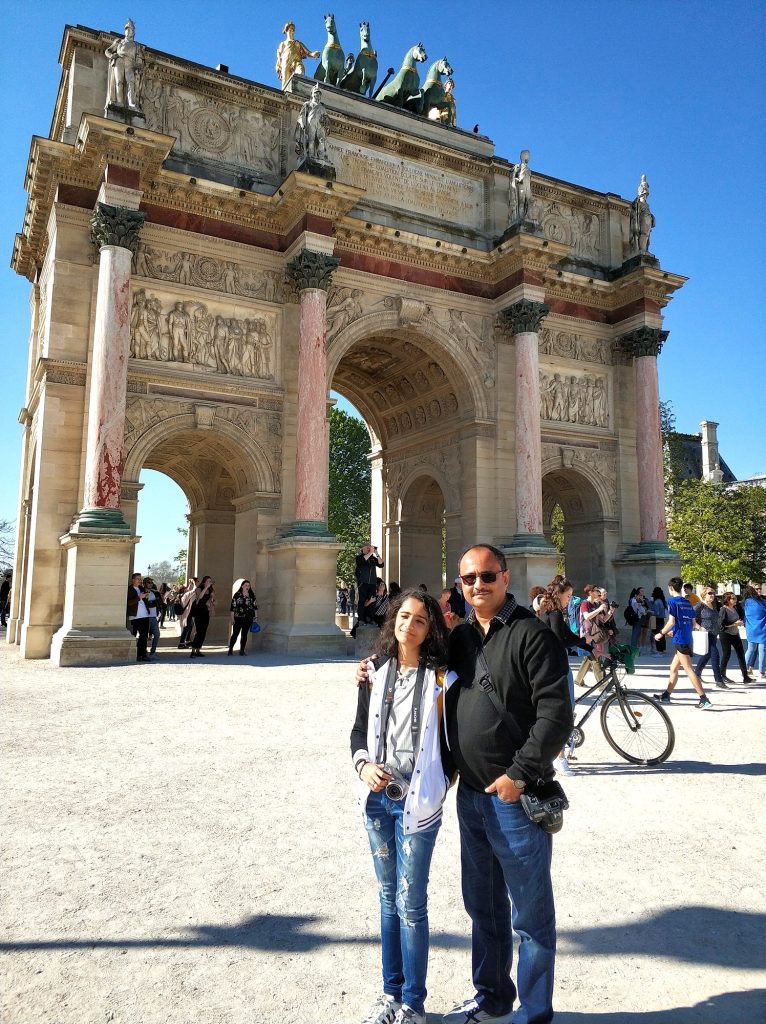
It was a perfect way to end our visit to this amazing museum- the Louvre – surrounded by the history, architecture, and beauty of Paris. But it was not the end of our day. Just on the opposite side of the Seine we spotted another magnificent museum –the Orsay Museum or Musee D’orsay. Being museum geeks we decided to spend the latter half of the day there for a different type of experience altogether.
.


